Why Do Children Refuse to Listen? Understand the Real Reasons Through
Psychology (Parents Must Watch)
Every parent has experienced this moment:
You ask your child to complete homework, put away their toys, stop using the
mobile phone, or get ready for school. But instead of listening, your child
argues, ignores you, becomes angry, or simply says, "No!"
After repeated attempts, parents often feel frustrated and wonder:
Why does my child never listen? Am I not being strict enough?
But what if the reason behind your child's behavior is not simply
disobedience?
Sometimes, a child is not refusing to listen because they want to disrespect
their parents. They may be struggling to manage emotions, understand
instructions, seek independence, or communicate a need they cannot express
clearly.
Understanding the psychology behind this behavior can help parents respond
more effectively.
1. Children Are Still Developing Their Self-Control
A child's brain is still developing, particularly the areas responsible for
planning, decision-making, emotional regulation, and impulse control.
This means children may understand what they are supposed to do but still
struggle to control their immediate reactions.
For example, a child may know that homework is important but find it difficult
to stop playing and begin studying.
What parents can do:
Instead of saying, "You never listen to me," try giving a clear
and manageable instruction.
"Let's put the toys away first. After that, we will start your
homework."
Breaking tasks into smaller steps can make it easier for children to follow
instructions.
2. Sometimes, Children Feel They Have No Control
Children spend much of their day following instructions:
Wake up, get ready, go to school, complete homework, eat, study, and sleep.
When every decision is made for them, some children begin to resist simply
because they want to feel independent.
This is particularly common during toddlerhood and adolescence, when
children naturally begin exploring their autonomy.
What parents can do:
Give your child small, age-appropriate choices.
Instead of saying:
"Do your homework right now!"
Try:
"Would you like to complete your math first or English first?"
The responsibility remains with the child, but they feel included in the
decision.
3. Children May Be Seeking Attention
Sometimes, children learn that they receive the most attention when they
argue, shout, refuse, or create a disturbance.
If parents are usually busy but immediately react when the child misbehaves,
the child may unintentionally learn that negative behavior is an effective way
to get attention.
This does not mean every difficult behavior is attention-seeking. It means
that the way adults respond can sometimes influence whether a behavior
continues.
What parents can do:
Give your child regular positive attention before conflicts arise.
Spend 15–20 minutes daily doing something your child enjoys, without mobile
phones or distractions.
Notice and appreciate positive behavior:
"I liked how you started your homework when I asked."
Children need attention for who they are, not only for what they do wrong.
4. Your Child May Be Emotionally Overwhelmed
A child who is tired, hungry, anxious, disappointed, or overstimulated may
find it difficult to follow instructions.
Imagine a child returning home after a stressful school day. The parent
immediately asks them to study, but the child becomes irritated or refuses.
The behavior may look like stubbornness, but the child may first need time
to regulate their emotions.
What parents can do:
Before correcting the behavior, try to understand the emotional state.
Ask:
"Was your day difficult today?"
"Are you feeling tired?"
"Do you need a little break before we begin?"
A calm child is often better able to listen, think, and cooperate.
5. Too Many Instructions Can Confuse Children
Parents sometimes give several instructions at once:
"Put your bag away, change your clothes, wash your hands, eat your food,
and then finish your homework."
For a young child, remembering and completing multiple instructions can be
difficult.
What parents can do:
Give one instruction at a time.
Use simple language, make eye contact gently, and allow your child enough
time to respond.
For example:
"First, put your school bag in its place."
Once the child completes the task, move to the next instruction.
6. Children Learn More From What Parents Do Than What They Say
Children observe how adults handle anger, disagreement, and frustration.
If parents frequently shout, interrupt, threaten, or dismiss others, children
may learn to communicate in similar ways.
A parent cannot expect a child to remain calm while the parent is losing
control.
What parents can do:
Model the behaviour you want your child to develop.
If you become angry, take a pause and say:
"I am feeling frustrated right now. I will calm down and then we can
talk."
This teaches children that emotions are normal, but they can be managed
respectfully.
7. Sometimes, the Problem Is Not Behavior Alone
If a child consistently struggles to follow instructions, parents should
also consider whether there may be an underlying difficulty.
Some children may experience challenges related to:
·
Attention and concentration
·
Language or understanding instructions
·
Learning difficulties
·
Anxiety or emotional distress
·
Sleep problems
·
Sensory sensitivities
·
Developmental differences
A child who frequently appears not to listen may actually be struggling to
process or respond to what is being said.
If these difficulties are persistent and affect home, school, or
relationships, a qualified child psychologist or developmental professional can
help assess the underlying needs.
5 Practical Ways to Make Your Child Listen Without Shouting
1. Connect Before You Correct
Before giving an instruction, approach your child calmly.
A simple sentence like, "I know you are enjoying your game, but it is
time to stop," can make the transition easier.
2. Be Clear and Consistent
Avoid changing rules according to your mood.
Children feel more secure when expectations are predictable.
3. Use Positive Reinforcement
Notice cooperation and effort.
Instead of focusing only on mistakes, appreciate the moments when your child
listens, tries, or takes responsibility.
4. Set Firm but Respectful Boundaries
Being understanding does not mean allowing every behavior.
You can say:
"I understand that you are angry, but hitting is not acceptable."
Acknowledge the emotion while maintaining the boundary.
5. Spend Time Understanding Your Child
Sometimes, the most important parenting question is not
"Why won't my child listen to me?"
It is:
"What might my child be trying to communicate through this
behavior?"
That question can change the entire parent-child relationship.
A Message for Every Parent
Children do not always have the emotional vocabulary to explain what they
feel.
Their frustration may come out as anger. Their insecurity may appear as
stubbornness. Their need for connection may look like constant demands.
This does not mean parents should ignore inappropriate behavior. It means
discipline should be combined with understanding.
A child who feels heard is more likely to learn how to listen.
You do not need to be a perfect parent. You need to be a parent who is
willing to understand, guide, and grow alongside your child.
Because parenting is not about making children obey every instruction
blindly.
It is about helping them develop the emotional skills, confidence, and
responsibility to make better choices—even when you are not around.
Mano Srijan Counselling Centre
Understand the behavior. Connect with the child. Build a
healthier relationship.
Website: www.manosrijan
Contact: 7619063351
Latest Articles
-

Why Do Children Refuse to Listen? Understand the Psychology Behind Their Behaviour
-

Your Child Needs Your Time, Not Just Your Things: Understanding Children's Mental Health
-
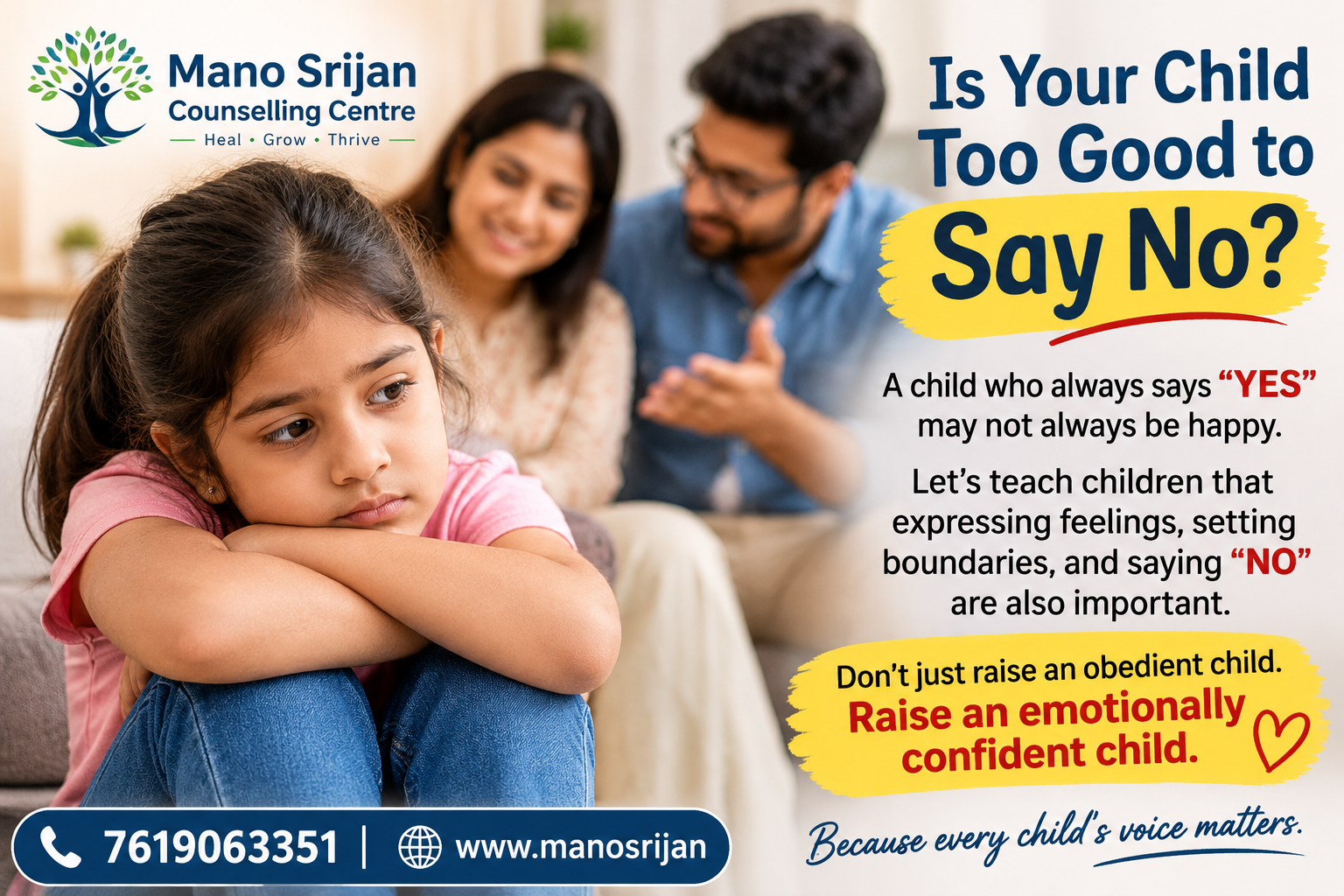
The Child Who Never Says No: Understanding People-Pleasing in Children
-

Conflict Resolution Mein Rishte Kamzor Kyon Ho Rahe Hain?
-
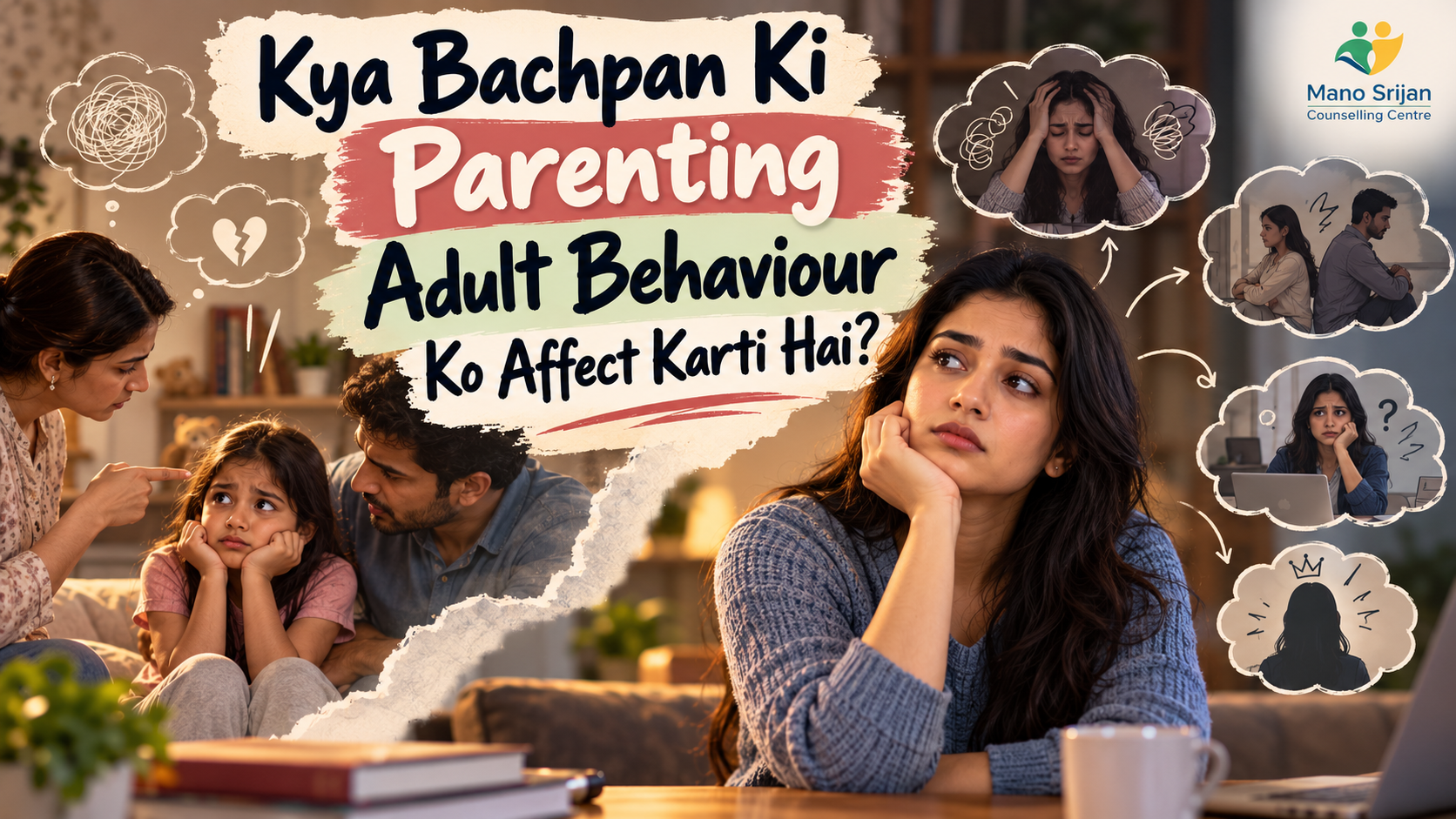
Kya Bachpan Ki Parenting Adult Behaviour Ko Affect Karti Hai?
-

Kya Pyar Mein Apmaan Sehna Zaroori Hai?