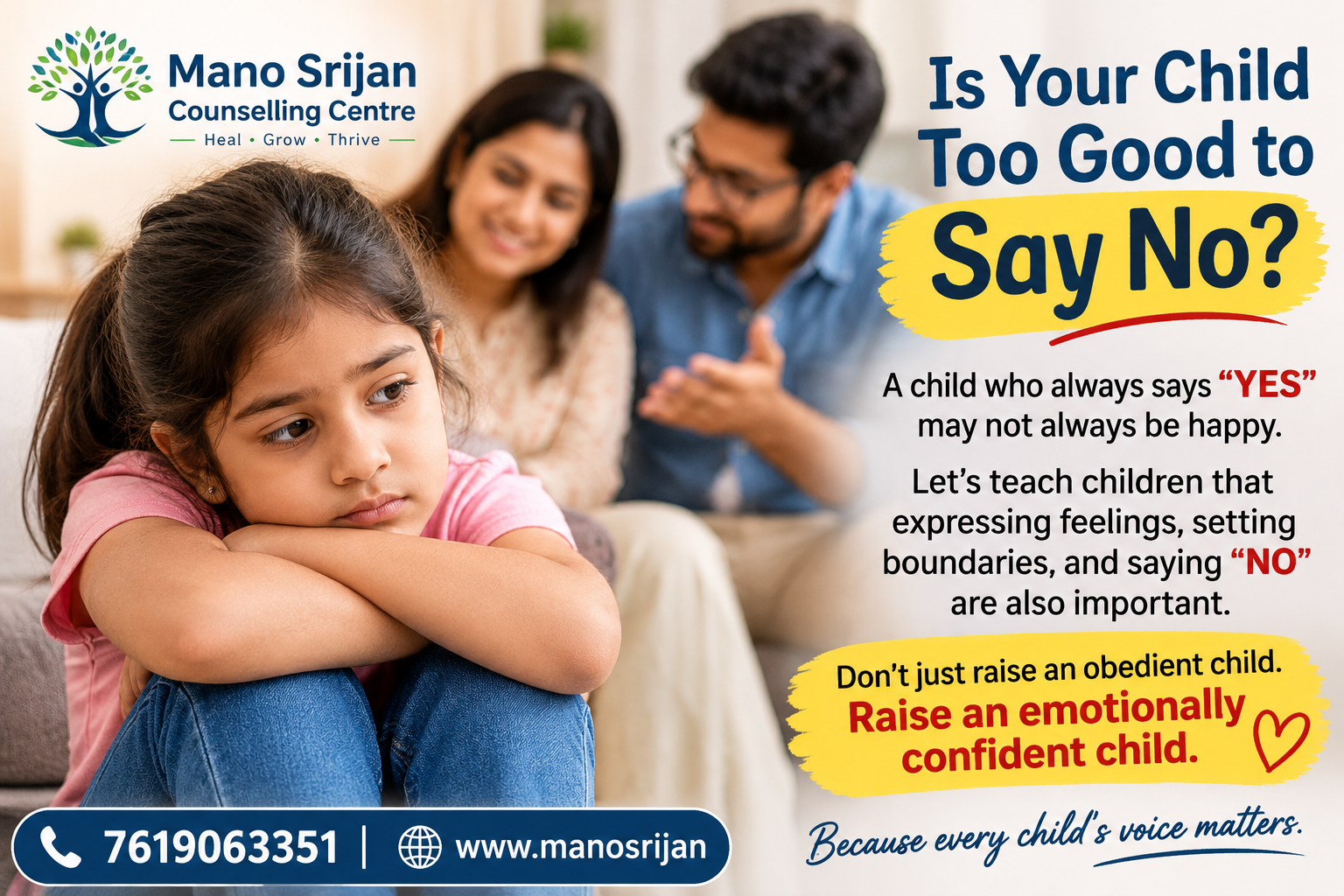
Is your child truly happy, or have they simply learned that keeping everyone happy is the safest way to be loved?
Every parent feels proud when their child is polite, obedient, cooperative, and never argues. A child who follows instructions, avoids conflict, shares everything, and rarely complains is often described as a "well-behaved child."
But have we ever stopped to ask what lies behind this behavior?
Sometimes, a child who never says no is not necessarily confident, emotionally mature, or naturally easygoing. They may have learned to suppress their own feelings, ignore their preferences, and prioritize other people's expectations to avoid disappointment, criticism, or rejection.
This is an important but often overlooked aspect of childhood emotional development.
Children gradually learn what behaviors receive approval from the adults around them.
When a child is appreciated only for being obedient, adjusting to others, scoring good marks, or never questioning authority, they may begin to believe that acceptance depends on meeting expectations.
For example:
A child wants to play but agrees to study because they fear disappointing their parents.
A child feels hurt by a relative's comment but smiles because speaking up may be considered disrespectful.
A child dislikes an activity but continues participating because everyone expects them to enjoy it.
A child is upset but says, "I'm fine," because they do not want to create problems.
These behaviors may appear harmless individually. However, when they become a consistent pattern, children may gradually lose touch with their own emotional needs.
There is no single explanation. Several emotional and environmental factors may contribute to this behavior.
Some children become highly sensitive to the reactions of parents, teachers, and other important adults. They may worry that expressing disagreement will make others angry or unhappy.
They begin choosing approval over personal preference.
When children repeatedly hear statements such as "You are such a good child because you always listen," they may start connecting their worth with obedience.
They may unconsciously believe that disagreeing or making mistakes could make them less lovable.
Children who frequently witness arguments, criticism, or emotionally intense reactions may learn that disagreement is unsafe.
To maintain peace, they may become overly accommodating and avoid expressing uncomfortable feelings.
When children are rarely encouraged to express what they want, dislike, or feel, they may struggle to recognize their own preferences.
Instead of asking themselves, "What do I want?" they automatically ask, "What will make everyone happy?"
Some children start feeling responsible for keeping their parents happy, preventing arguments, or managing the emotions of people around them.
This can create an emotional burden that is not appropriate for their developmental stage.
A child who is consistently agreeable may sometimes be communicating emotional discomfort through subtle behaviors.
1. Always Says "It's Okay"
Even when something hurts them, they quickly respond that everything is fine.
2. Struggles to Make Simple Choices
They frequently ask others what they should eat, wear, play, or choose, even when they have their own preferences.
3. Feels Guilty About Disagreeing
They may become anxious or upset after expressing a different opinion.
4. Avoids Asking for Help
They may hide their difficulties because they do not want to trouble anyone.
5. Constantly Seeks Approval
They frequently look for reassurance that others are happy with them or that they have done nothing wrong.
These signs do not automatically indicate an emotional problem. A child's age, temperament, family environment, and overall behavior should always be considered.
When children repeatedly suppress their emotions and personal preferences, it may influence how they understand themselves and relate to others as they grow older.
Over time, some may experience:
Difficulty setting personal boundaries.
Low confidence in their own decisions.
Excessive guilt when prioritizing themselves.
Fear of criticism or rejection.
Difficulty expressing anger and disappointment.
A tendency towards people-pleasing in friendships and relationships.
Confusion about personal needs and identity.
It is important to remember that these outcomes are not inevitable. Supportive relationships and opportunities to practice healthy self-expression can help children develop emotional confidence.
The goal is not to make children argumentative or disrespectful. The goal is to help them understand that they can be kind, respectful, and cooperative without ignoring their own feelings.
Allow your child to express a different opinion without immediately correcting or criticizing them.
Try saying:
"It's okay to think differently. I want to understand your point of view."
Appreciate honesty, independent thinking, effort, courage, and emotional expression.
Instead of always saying, "You are such a good child because you listen to me," try:
"I appreciate that you shared what you really feel."
Allow children to make small decisions about clothing, hobbies, food, and recreational activities.
This helps develop independence and confidence in their own judgment.
Help children understand that they can politely refuse something that makes them uncomfortable.
Teach simple sentences such as:
"I don't feel comfortable with this."
"Can I have some time to think?"
"I don't want to play this game."
"I need some help."
Avoid dismissing feelings with statements like "Don't be so sensitive" or "There is nothing to cry about."
Instead, try:
"I can see that this upset you. Would you like to tell me what happened?"
Children need to understand that making mistakes, disagreeing, or having different preferences does not reduce their worth.
They should not have to earn emotional acceptance through perfect behavior.
Try this simple activity at home.
Ask your child three questions:
What is one thing you enjoy but rarely get to choose?
Is there something you sometimes agree to even when you don't want to?
What is one thing you would like us to understand about your feelings?
Listen without interrupting, correcting, or judging.
The purpose is not to find immediate solutions. It is to help your child experience the feeling of being heard.
If a child consistently struggles to express preferences, experiences intense fear of disappointing others, shows persistent anxiety, or finds it difficult to establish healthy boundaries, professional guidance may be helpful.
Child counseling can provide a supportive environment to explore emotional experiences, develop self-confidence, strengthen communication skills, and understand individual needs.
Parents can also benefit from guidance on creating an emotionally safe and supportive home environment.
A child who always says yes may make parenting appear easier, but healthy childhood development involves much more than obedience.
Children need the freedom to ask questions, express disagreement, make mistakes, communicate discomfort, and develop their own identities.
We should teach children to respect others but also to respect themselves.
Because the real goal of parenting is not to raise a child who never says no.
It is to raise a child who knows when to say yes, when to say no, and feels safe enough to express both.
At Mano Srijan Counselling Centre, we believe every child deserves to feel heard, understood, respected, and emotionally safe.
Supporting a child's emotional development today helps build the foundation for healthier relationships, stronger self-esteem, and confident decision-making tomorrow.
Let's create a generation of children who are not just well-behaved but emotionally aware and confident.
Because every child's voice matters.