- Call Us: +91-7619063351
- Email: info@manosrijan.com
- Magazine
- Donate
- Podcast

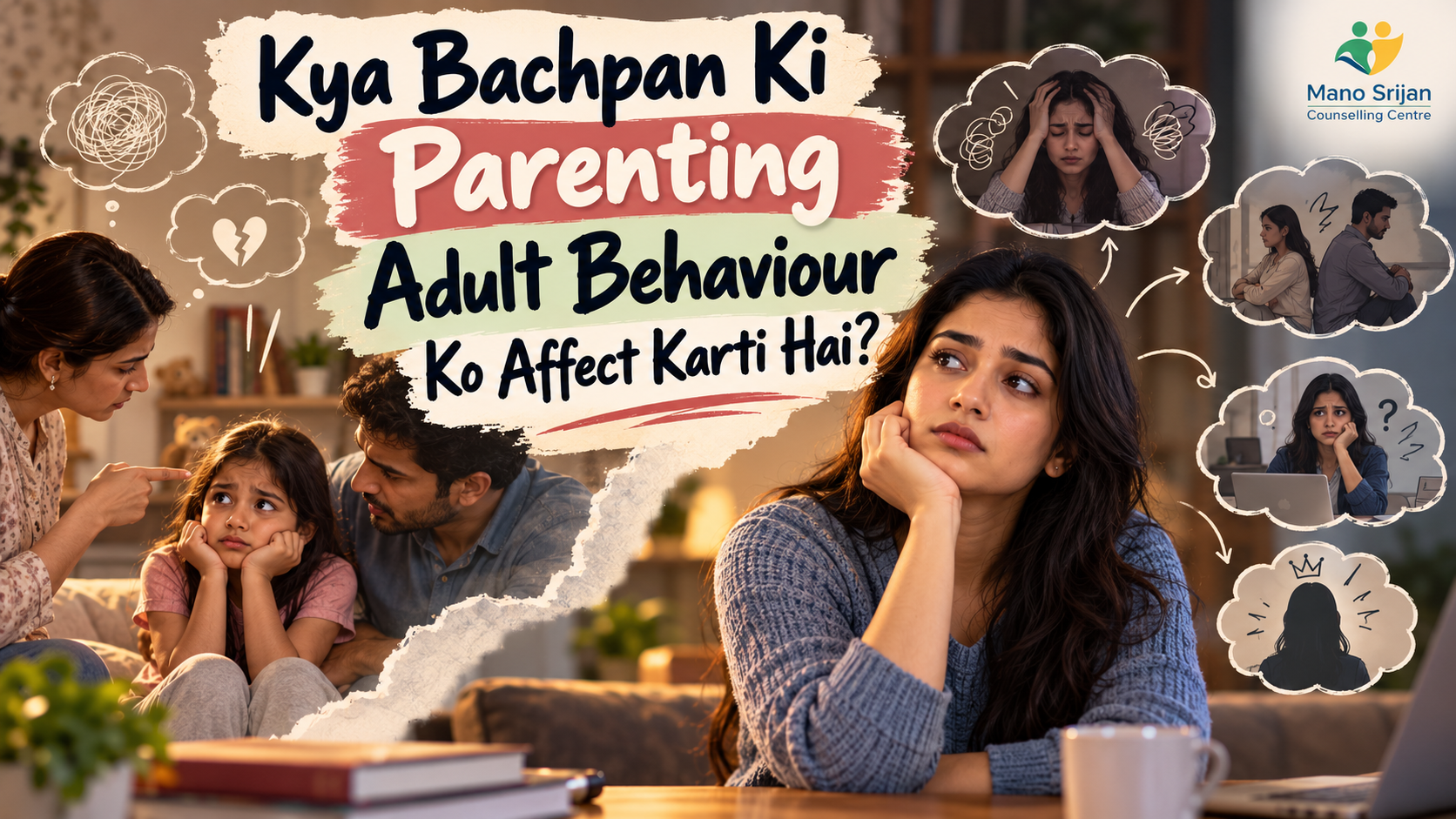
“Hum bade toh ho jaate hain, lekin bachpan mein seekhe hue emotional
patterns kabhi-kabhi hamare saath bade hote rehte hain.”
Kya aapne kabhi notice kiya hai ki kuch adults chhoti-chhoti baaton par
gussa ho jaate hain, kuch apni feelings express nahi kar paate, jabki kuch log
hamesha doosron ko khush rakhne ki koshish karte rehte hain?
Kabhi-kabhi hum in behaviours ko personality ka hissa samajh lete hain.
Lekin psychology ke perspective se dekhein toh hamare adult behaviour par
childhood experiences, parenting styles aur family environment ka important
influence ho sakta hai.
Bachpan mein parents ya caregivers ke saath hamara relationship sirf us
samay ki emotional needs ko affect nahi karta, balki hum emotions ko kaise
samajhte hain, relationships mein kaise behave karte hain aur stressful
situations ko kaise handle karte hain, in sabki foundation develop karne mein
bhi role play kar sakta hai.
Lekin iska matlab ye nahi hai ki har adult problem ke liye parents
responsible hain. Human behaviour genetics, temperament, education, social
experiences, relationships aur life circumstances ke combination se develop
hota hai.
Aaiye samajhte hain ki childhood parenting adult personality,
emotional regulation, self-esteem aur relationships ko kaise influence kar
sakti hai, aur unhealthy patterns ko adulthood mein kaise improve kiya
ja sakta hai.
Developmental psychology ke according, childhood human development ka ek
important stage hai. Is period mein bachche emotions ko identify karna, social
relationships banana, problems solve karna aur apne environment ko samajhna
seekhte hain.
Parents aur caregivers bachchon ke liye early role models hote hain.
Bachche sirf parents ki instructions se nahi, balki unke everyday behaviour
ko observe karke bhi seekhte hain.
For example, agar ghar mein disagreements ko calmly discuss kiya jaata hai,
toh bachcha constructive communication seekh sakta hai.
Wahin agar disagreements ke dauraan frequently shouting, humiliation ya
aggression hoti hai, toh kuch bachche conflict ko handle karne ke liye similar
patterns develop kar sakte hain.
Psychologist Albert Bandura ki Social Learning Theory bhi observational
learning ki importance explain karti hai.
Is theory ke according, individuals doosron ke behaviour aur uske
consequences ko observe karke naye behaviours seekh sakte hain.
Isliye parenting sirf bachche ko kya sikhaya ja raha hai, is baare mein nahi
hai. Ye bhi important hai ki bachcha ghar mein roz kya dekh raha hai.
Psychology mein parenting styles ko samajhne ke liye commonly chaar broad
categories discuss ki jaati hain.
Ye categories general patterns ko explain karti hain. Real-life parenting in
categories se zyada complex hoti hai.
Is parenting style mein strict rules, obedience aur parental authority par
zyada emphasis hota hai.
Bachche ko frequently kaha ja sakta hai:
“Jo kaha hai wahi karo.”
“Bade kabhi galat nahi hote.”
“Zyada sawaal mat poochho.”
Aise environment mein kuch bachche apni feelings express karne se hesitate
kar sakte hain.
Adulthood mein kuch individuals authority figures se excessively fear karna,
apne decisions par doubt karna ya disagreement avoid karna seekh sakte hain.
Lekin har strict parenting experience ka outcome same nahi hota. Warmth,
cultural context aur child temperament bhi important factors hain.
Is style mein parents boundaries aur expectations maintain karte hain, lekin
bachchon ki feelings aur opinions ko bhi importance dete hain.
For example:
“Main samajhta hoon ki tum upset ho, lekin kisi ko maarna acceptable nahi
hai. Chalo, problem solve karne ka better tareeka sochte hain.”
Research mein authoritative parenting ko kai positive developmental outcomes
ke saath associate kiya gaya hai.
Ismein bachchon ko emotional support ke saath responsibility aur
independence develop karne ka opportunity milta hai.
Permissive parenting mein warmth ho sakti hai, lekin rules aur consistent
limits comparatively kam hote hain.
Agar bachche ko age-appropriate boundaries aur responsibilities seekhne ke
opportunities nahi milte, toh kuch situations mein frustration tolerance aur
self-regulation develop karna challenging ho sakta hai.
Lekin permissive parenting ka matlab ye nahi ki bachcha adulthood mein
necessarily irresponsible hoga.
Is style mein parents ya caregivers emotional responsiveness aur guidance
kam provide kar sakte hain.
Kabhi-kabhi iska reason neglect hota hai, lekin parental stress, mental
health difficulties, financial hardship ya lack of support bhi caregiving ko
affect kar sakte hain.
Aise experiences kuch bachchon mein emotional insecurity ya self-worth se
related difficulties ke risk ko badha sakte hain.
Important baat ye hai ki parenting styles destiny decide nahi karti.
Supportive teachers, relatives, friends aur later-life relationships bhi
development ko positively influence kar sakte hain.
Emotional neglect tab hota hai jab bachche ki emotional needs repeatedly
adequately recognize ya respond nahi ki jaati.
For example, bachcha sad ho aur use baar-baar kaha jaaye:
“Rona band karo.”
“Itni chhoti baat par kaun rota hai?”
“Tumhe emotional hone ki zaroorat nahi.”
Kabhi-kabhi parents ka intention bachche ko strong banana hota hai, lekin
repeated emotional dismissal bachche ko ye message de sakti hai ki uski
feelings important nahi hain.
Adulthood mein kuch log apni emotions identify karne, help maangne ya
emotional intimacy develop karne mein difficulties experience kar sakte hain.
Kuch individuals har problem ko independently solve karne ki koshish karte
hain, chahe unhe support ki zaroorat hi kyun na ho.
Psychological insight: Emotional strength ka matlab
feelings ko suppress karna nahi, balki unhe understand aur regulate karna hai.
Strict parenting aur anxiety ke beech relationship complex hai.
Har strict parent ka bachcha anxious nahi hota, aur anxiety ke causes bhi
multiple hote hain.
Lekin excessively controlling, threatening ya unpredictable parenting
environments kuch children mein anxiety-related difficulties ke risk se
associated ho sakte hain.
Maan lijiye ek bachche ko har mistake par severe criticism face karna padta
hai.
Woh dheere-dheere mistakes ko learning opportunity ke bajay danger ya
failure ke roop mein dekhne lag sakta hai.
Adulthood mein ye pattern perfectionism, fear of failure ya excessive
reassurance-seeking ke form mein appear ho sakta hai.
For example, office mein presentation dene se pehle person baar-baar sochta
hai:
“Agar mujhse galti ho gayi toh?”
“Log mere baare mein kya sochenge?”
“Kya main enough capable hoon?”
Aise thoughts sirf parenting ki wajah se nahi hote, lekin early experiences
in beliefs ko shape karne mein contribute kar sakte hain.
Self-esteem ka matlab hai hum apni personal worth ko kaise evaluate karte
hain.
Bachpan mein parents ka feedback self-concept develop karne mein important
role play kar sakta hai.
Agar bachche ko repeatedly compare kiya jaata hai—
“Dekho Sharma ji ka beta kitna intelligent hai.”
“Tum apne bhai jaise kyun nahi ho?”
“Tumse kuch nahi hoga.”
—Toh kuch bachche apni value ko achievements aur external approval se
associate karne lag sakte hain.
Adulthood mein ye individuals apni achievements ke bawajood khud ko
inadequate feel kar sakte hain.
Unhe lag sakta hai ki acceptance paane ke liye hamesha perfect perform karna
zaroori hai.
Isliye parents ko bachche ki personality ya worth ko criticize karne ke
bajay specific behaviour par constructive feedback dena chahiye.
For example:
“Tum careless ho” kehne ke bajay, “Is assignment mein kuch mistakes hain.
Chalo, inhe improve karte hain.”
Ye approach learning aur self-confidence dono ko support kar sakti hai.
Attachment Theory, jise John Bowlby aur Mary Ainsworth ke work se develop
kiya gaya, early caregiver relationships aur emotional security ki importance
explain karti hai.
Jab caregivers generally responsive aur emotionally available hote hain, toh
bachche ko safety aur trust develop karne mein support mil sakta hai.
Lekin inconsistent ya frightening caregiving experiences kuch children ke
attachment expectations ko affect kar sakte hain.
Adulthood mein attachment-related patterns relationships mein appear ho
sakte hain.
Kuch individuals relationships mein rejection ya abandonment ka excessive
fear experience karte hain.
Woh frequently reassurance seek kar sakte hain.
For example:
“Tum mujhe ignore toh nahi kar rahe?”
“Tum pehle jaise pyar kyun nahi karte?”
Kuch individuals emotional closeness se uncomfortable feel kar sakte hain.
Woh vulnerability express karne ke bajay emotional distance maintain karna
prefer kar sakte hain.
Secure attachment se associated individuals generally emotional closeness
aur personal independence ke beech flexible balance maintain kar paate hain.
Lekin attachment styles permanent labels nahi hain.
Adult relationships, therapy aur corrective emotional experiences ke through
attachment-related patterns change ho sakte hain.
Anger ek normal human emotion hai.
Lekin jab anger repeatedly aggression, impulsive reactions ya relationship
conflicts mein convert hota hai, toh emotional regulation par kaam karna useful
ho sakta hai.
Childhood adversity, including violence exposure, abuse ya chronic family
conflict, kuch individuals ke stress-response systems aur emotional regulation
ko affect kar sakti hai.
Agar bachcha frequently threatening situations experience karta hai, toh woh
environmental signals ke prati zyada alert ho sakta hai.
Adulthood mein kuch individuals neutral situations ko bhi threatening
interpret kar sakte hain.
For example, partner ki normal disagreement ko personal rejection ya
disrespect samajhna.
Lekin anger problems ko directly childhood trauma ka proof nahi maana ja
sakta.
Sleep problems, current stress, substance use, learned habits aur other
mental health factors bhi anger regulation ko affect kar sakte hain.
Important: Childhood adversity kisi adult ke aggressive
behaviour ko explain karne mein help kar sakti hai, lekin aggression ko justify
nahi karti.
Kya aap aise person ko jaante hain jo har situation mein doosron ko khush
rakhne ki koshish karta hai?
Woh “No” kehne se darta hai, apni needs ignore karta hai aur disagreement
avoid karta hai.
Is pattern ko commonly people-pleasing kaha jaata hai.
Kuch cases mein ye behaviour childhood experiences se connected ho sakta
hai.
For example, agar bachche ko affection tabhi milta ho jab woh parents ki
expectations fulfil kare, toh woh approval ko acceptance ke saath associate kar
sakta hai.
Adulthood mein person soch sakta hai:
“Agar maine mana kiya toh log mujhse naraz ho jaayenge.”
“Agar main sabko khush nahi rakhunga toh log mujhe chhod denge.”
Lekin people-pleasing ka reason hamesha childhood nahi hota. Cultural
expectations, personality aur current relationships bhi important factors hain.
Healthy boundaries aur assertive communication seekhna is pattern ko improve
karne mein helpful ho sakta hai.
Parents naturally apne bachchon ko protect karna chahte hain.
Lekin jab protection ke chakkar mein bachche ko age-appropriate decisions
lene, mistakes karne ya problems solve karne ke opportunities nahi milte, toh
independence develop karna difficult ho sakta hai.
For example, agar parents har chhota decision bachche ke liye lete hain, toh
woh apni judgment par confidence develop karne ke fewer opportunities paa sakta
hai.
Adulthood mein kuch individuals decisions lene se pehle excessive
reassurance seek kar sakte hain.
Unhe failure ka fear ho sakta hai.
Healthy parenting mein safety aur independence ka balance important hai.
Bachchon ko age-appropriate responsibilities, choices aur problem-solving
opportunities deni chahiye.
Adult romantic relationships mein hum apne early experiences se develop hue
expectations lekar aa sakte hain.
Agar bachpan mein healthy conflict resolution observe kiya ho, toh adulthood
mein disagreements ko calmly handle karna comparatively easier ho sakta hai.
Wahin agar family environment mein frequent criticism, emotional withdrawal
ya aggression thi, toh kuch individuals similar communication patterns repeat
kar sakte hain.
Isse kabhi-kabhi intergenerational patterns kaha jaata hai.
For example, ek person jo bachpan mein frequent shouting observe karta tha,
adulthood mein stress ke dauraan shouting ko normal conflict response samajh
sakta hai.
Lekin ye pattern inevitable nahi hai.
Self-awareness, emotional regulation aur healthy relationship skills
seekhkar individuals apne learned behaviours change kar sakte hain.
Hum apne childhood experiences ko change nahi kar sakte, lekin un
experiences se develop hue kuch patterns par kaam kar sakte hain.
Perfectionism ka matlab sirf achha perform karna nahi hai.
Unhealthy perfectionism mein person apni worth ko flawless performance ke
saath associate kar sakta hai.
Agar bachpan mein achievements par excessive pressure tha ya mistakes par
harsh criticism milta tha, toh kuch individuals failure ke prati highly
sensitive ho sakte hain.
Adulthood mein ye pattern work stress, procrastination aur self-criticism ke
saath appear ho sakta hai.
Person kisi task ko start karne se bhi hesitate kar sakta hai kyunki use
fear hota hai ki result perfect nahi hoga.
Is pattern ko improve karne ke liye realistic expectations, self-compassion
aur mistakes ko learning opportunities ke roop mein dekhna useful ho sakta hai.
Ye article ka sabse important question hai.
Kya childhood experiences hamari adult personality permanently decide kar
dete hain?
Nahi. Childhood experiences influential ho sakte hain, lekin
deterministic nahi hote.
Human brain aur behaviour mein learning aur adaptation ki capacity adulthood
mein bhi bani rehti hai.
Is capacity ko neuroplasticity ke broader concept se samjha ja sakta hai.
New experiences, supportive relationships, education, psychological
treatment aur intentional behavioural practice se emotional aur behavioural
patterns improve ho sakte hain.
Kisi person ka difficult childhood hona ye guarantee nahi karta ki adulthood
mein use psychological difficulties hongi.
Similarly, supportive parenting ke bawajood bhi kisi individual ko mental
health challenges experience ho sakte hain.
Human development multiple interacting factors se influenced hota hai.
Agar aapko lagta hai ki kuch childhood experiences aaj bhi aapke behaviour ko
influence kar rahe hain, toh self-awareness aur professional support helpful ho
sakte hain.
Notice karein ki kin situations mein aap excessively angry, anxious ya
insecure feel karte hain.
For example:
“Kya criticism sunte hi mujhe strong emotional reaction hota hai?”
“Kya rejection ka fear mujhe unnecessary reassurance seek karne par majboor
karta hai?”
Cognitive Behavioural Therapy (CBT) mein automatic thoughts aur beliefs ko
identify karne par focus kiya jaata hai.
For example:
“Main hamesha fail hota hoon.”
Is thought ko examine karein:
“Kya mere paas is belief ke supporting evidence hain?”
“Kya main situation ko overly negatively interpret kar raha hoon?”
Deep breathing, grounding exercises, mindfulness aur planned breaks
emotional regulation ko support kar sakte hain.
Strong emotions ke dauraan immediate reaction dene ke bajay pause lena
helpful ho sakta hai.
Apni needs aur limits ko respectful language mein express karna seekhein.
For example:
“Main aapki baat samajhta hoon, lekin is decision ke liye mujhe thoda time
chahiye.”
Apne past experiences ko samajhne ke dauraan khud ko blame karne ke bajay
compassionate perspective adopt karein.
Agar childhood memories, emotional difficulties ya repeated behavioural
patterns daily functioning ko affect kar rahe hain, toh qualified psychologist
ke saath assessment aur therapy helpful ho sakti hai.
Therapy ka objective parents ko blame karna nahi, balki current emotional
difficulties ko understand karna aur healthier coping strategies develop karna
hai.
Parenting mein perfection zaroori nahi hai.
Bachchon ko consistently supportive, responsive aur appropriately structured
environment provide karna important hai.
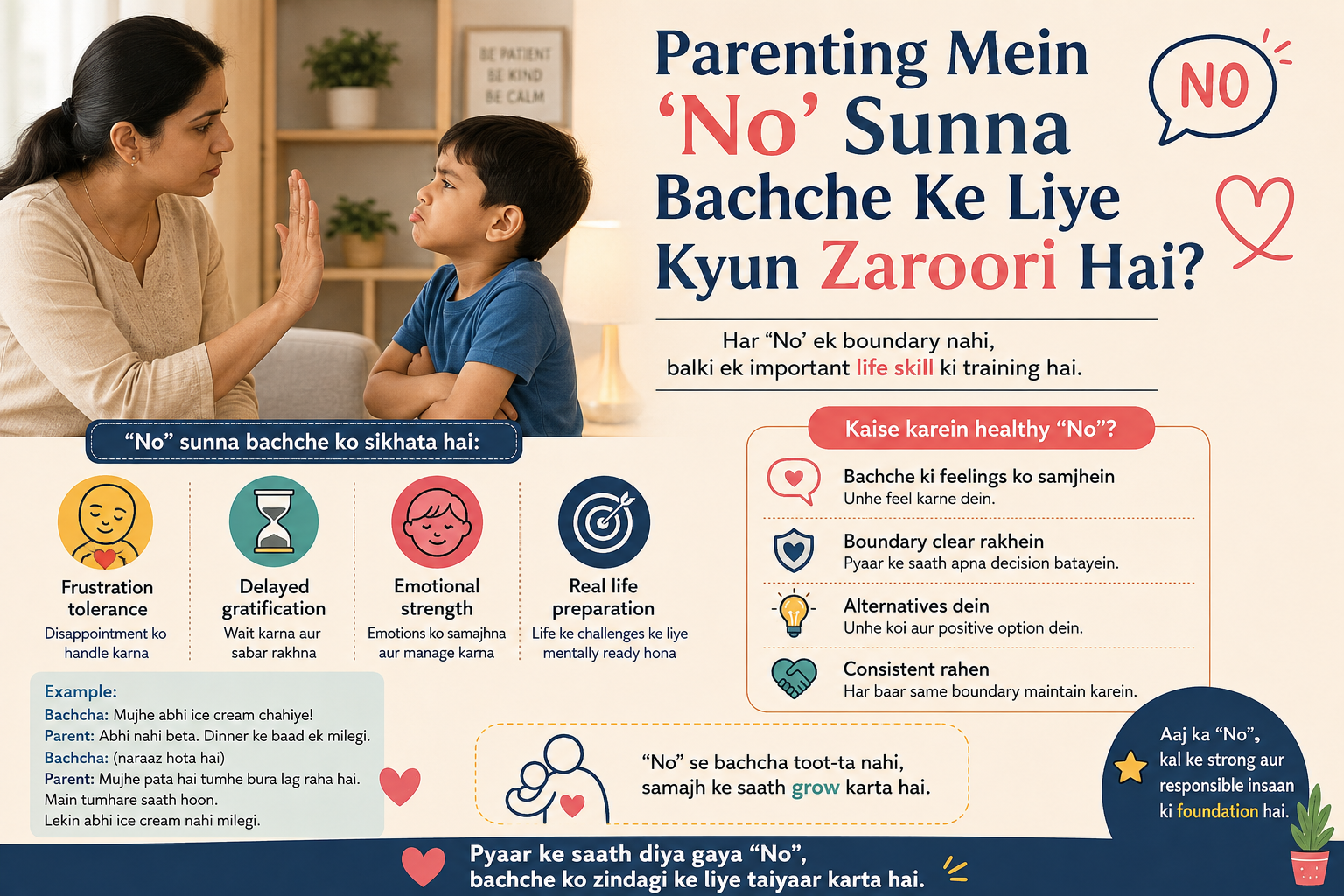
Emotional Validation: Bachche ki feelings ko acknowledge
karein. “Tumhe gussa aa raha hai, main samajh sakta hoon” kehna emotion ko
accept karta hai, harmful behaviour ko nahi.
Positive Discipline: Discipline ka focus punishment aur
humiliation ke bajay learning, responsibility aur age-appropriate consequences
par rakhein.
Healthy Communication: Bachchon ko apni opinions aur
questions respectfully express karne ka opportunity dein.
Avoid Comparisons: Har bachche ka temperament, learning
pace aur developmental journey different hota hai.
Model Healthy Behaviour: Parents khud respectful
communication, emotional regulation aur problem-solving demonstrate karein.
Encourage Independence: Bachchon ko unki age aur abilities
ke according decisions lene aur responsibilities manage karne dein.
Repair After Mistakes: Agar parent se galti ho jaaye, toh
appropriate apology aur behaviour change bachche ko accountability ka important
lesson sikha sakta hai.
Healthy parenting ka matlab bachche ko har difficulty se bachana nahi, balki
usse challenges handle karne ke liye emotional aur practical skills develop
karne mein support karna hai.
Har emotional difficulty ka matlab psychological disorder nahi hota.
Lekin agar kuch patterns persistent hain aur daily functioning ko
significantly affect kar rahe hain, toh professional assessment useful ho sakta
hai.
Examples include:
·
Frequent emotional outbursts ya anger regulation
difficulties
·
Persistent anxiety, low mood ya low self-esteem
·
Repeated unhealthy relationship patterns
·
Extreme fear of rejection ya abandonment
·
Significant difficulty expressing emotions
·
Childhood memories se related ongoing distress
·
Work, relationships ya daily responsibilities
mein noticeable impairment
Qualified mental health professional individual history, current symptoms
aur relevant circumstances ko consider karke appropriate guidance provide kar
sakta hai.
Childhood parenting aur family experiences adult behaviour ko influence kar
sakte hain.
Hamare emotional responses, self-esteem, communication patterns aur
relationship expectations mein early experiences ka contribution ho sakta hai.
Lekin ye samajhna bhi utna hi important hai ki parenting kisi individual ki
adult personality ka single determining factor nahi hai.
Genetics, temperament, education, social environment, life events aur
personal choices bhi human development ko shape karte hain.
Agar kisi person ne difficult childhood experience kiya hai, toh iska matlab
ye nahi ki uska future bhi difficult hi hoga.
Self-awareness, supportive relationships, psychological intervention aur
consistent behavioural practice ke through meaningful change possible hai.
Parents ke liye sabse important message hai ki bachchon ko sirf discipline
aur academic success ki zaroorat nahi hoti. Unhe emotional understanding,
acceptance, safety aur age-appropriate independence bhi chahiye.
Aur adults ke liye message hai ki apne past ko samajhna personal growth ka
ek important step ho sakta hai.
“Bachpan hamare behaviour ki foundation ko influence kar sakta hai,
lekin adulthood humein naye patterns seekhne aur apni emotional growth par kaam
karne ka opportunity deta hai.”
Aaj hum apne emotions aur relationships ko samajhne ke liye jo efforts karte
hain, woh hamari well-being ke saath future generations ke emotional
environment ko bhi positively influence kar sakte hain.
Mano Srijan – Counselling Centre
Understanding Childhood. Supporting Emotional Growth. Building Healthier
Adults.
Disclaimer: Yeh article psychological awareness aur
educational purposes ke liye hai. Kisi bhi individual ke adult behaviour ka
cause sirf childhood parenting ko nahi maana ja sakta. Personal concerns ke
liye qualified mental health professional se assessment aur guidance lena
appropriate hai.