1. What Is Conflict Resolution and Why Is It Important in Marriage?
Conflict resolution refers to the process of addressing disagreements in a healthy and constructive way while maintaining mutual respect, trust, and emotional connection.
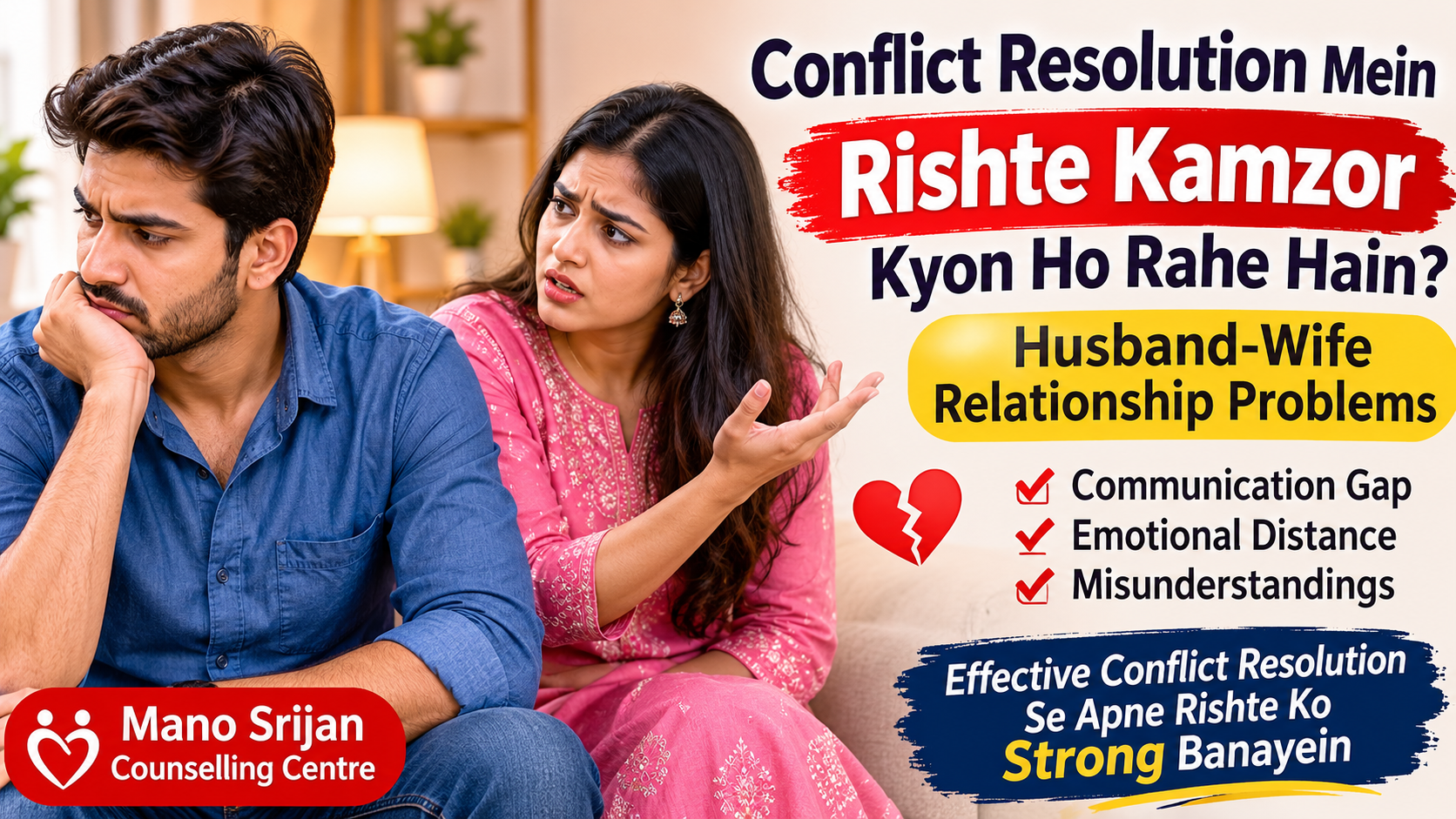
Disagreements between husband and wife are natural. Two individuals with different personalities, experiences, and expectations cannot always think alike.
The real problem begins when disagreements become personal attacks and the goal of communication shifts from finding a solution to proving who is right.
For example, husband and wife have an argument about household expenses.
Wife wants them to save money for the future, whereas Husband believes that meeting the family's present needs should be the priority.
Wife says, "You never think about our future."
Husband responds, "You only care about money. You never appreciate how hard I work."
Now, the discussion is no longer about financial planning. It has become an exchange of accusations.
If Wife had expressed her concern differently by saying, "I feel anxious about our financial future. Can we plan our monthly savings together?" Husband might have responded more positively.
This example highlights an important psychological aspect of relationships: sometimes, the way we communicate a problem determines how our partner responds to it.
Healthy conflict resolution does not mean eliminating every disagreement. It means learning how to discuss differences without damaging the relationship.
2. Communication Gap: One of the Major Reasons Relationships Become Weak
Communication is not simply about speaking. It also involves listening, understanding emotions, expressing needs, and responding with empathy.
Many married couples live in the same house but gradually stop having meaningful conversations.
Their discussions become limited to household expenses, children's education, office work, shopping, and daily responsibilities.
Over time, they may begin functioning more like people managing a household together than emotionally connected life partners.
In a husband and wife's relationship, the same pattern develops.
After returning from work, Husband spends most of his time on his mobile phone. The wife wants to share her daily experiences, but she feels that her husband is not interested.
One day, she says, "You don't care about anything I say anymore."
Husband responds, "I work all day. The moment I come home, you start complaining."
Both are expressing their feelings, but neither is trying to understand the emotions behind the other's words.
The wife may be seeking attention and emotional connection, while the husband may be experiencing work-related stress or feeling criticized.
If both continue reacting defensively, their communication gap may increase.
What Can Couples Do?
· Spend 15–20 minutes daily talking without mobile phones or other distractions.
· Listen to your partner without immediately giving advice.
· Allow each other to complete their thoughts.
· Ask, "Do you want me to listen, or should we find a solution together?"
· Express feelings instead of making accusations.
For example, instead of saying, "You never listen to me," try saying, "I feel disconnected when I try to share something important and our conversation gets interrupted."
This approach encourages understanding rather than defensiveness.
3. How Do Small Complaints Create Emotional Distance?
Relationships do not always become weak because of one major disagreement. Sometimes, repeated small experiences gradually create emotional distance.
These may include:
· Ignoring a partner's concerns repeatedly.
· Not acknowledging each other's efforts.
· Avoiding meaningful conversations.
· Bringing up past mistakes during every argument.
· Failing to appreciate everyday contributions.
· Taking a partner's presence and efforts for granted.
Consider Wife, who has repeatedly asked Husband to spend more quality time with her.
Every time, Husband promises, "We will go out next weekend."
However, due to professional commitments, the plans keep getting postponed.
Initially, Wife feels disappointed. Later, she becomes upset. Eventually, she stops asking.
The husband assumes that the issue has disappeared because the wife no longer complains.
However, Wife has not necessarily become satisfied. She may simply have stopped expressing her expectations.
The absence of complaints does not always indicate happiness. Sometimes, it may reflect emotional exhaustion or withdrawal.
Trust in a relationship is built not only through major promises but also through consistent everyday actions.
4. Unmet Expectations: What Do Husband and Wife Really Want From Each Other?
Every marriage involves expectations.
One partner may seek emotional support, while the other may prioritize financial stability. Some may value quality time, while others express love through practical responsibilities and acts of care.
Problems arise when expectations remain unspoken, but partners expect each other to understand them automatically.
The wife wants her husband to help her occasionally without being asked.
The husband believes that if the wife needs help, she should communicate it directly.
Wife thinks, "If Husband understands me, he should know when I am tired."
Husband thinks, "If she needs help, why doesn't she simply tell me?"
Both have different expectations, and both feel that their expectations are reasonable.
The issue may not be a lack of love but different ways of expressing and understanding love.
The husband expresses his care by fulfilling financial responsibilities, while the wife feels loved through quality time, meaningful conversations, and shared household responsibilities.
When partners fail to recognize each other's efforts, they may begin feeling unappreciated.
How Can Couples Improve This?
Partners should avoid assuming that their spouse will automatically understand every emotional need.
Instead, they can ask:
· What kind of support do you need from me?
· What makes you feel emotionally disconnected?
· When do you feel most supported in our relationship?
· How can we divide our responsibilities more effectively?
These conversations help couples understand each other's expectations instead of constantly feeling disappointed.
5. Ego and the Need to Always Be Right
One of the common patterns in unhealthy marital conflicts is the need to prove who is right.
During arguments, partners may become more focused on defending themselves than understanding the actual problem.
Husband and wife have an argument because husband fails to fulfill a promise.
Wife feels disappointed and wants him to acknowledge her feelings.
Husband explains that his work commitments made it difficult to keep the promise.
The wife wants emotional understanding, while the husband wants his circumstances to be understood.
However, neither acknowledges the other's perspective.
As a result, the argument ends without any meaningful resolution.
There is nothing wrong with expressing your opinion or explaining your circumstances. However, completely dismissing your partner's feelings can make conflict more difficult to resolve.
Husband could say:
"I understand that you felt disappointed when I couldn't fulfill my promise. I was dealing with work pressure, but I should have informed you earlier."
Similarly, Wife could respond:
"I understand that you were under pressure. I felt hurt because I was looking forward to spending that time with you."
Neither partner needs to abandon their perspective. Both simply need to acknowledge each other's experiences.
In a healthy relationship, winning every argument is not important. Understanding the problem and finding a solution together matters more.
6. Bringing Up Past Mistakes During Every Argument
Mistakes are a natural part of every relationship. However, repeatedly bringing up past mistakes during present disagreements can make resolution difficult.
Imagine your husband forgets to complete a household task.
Wife gets upset and says, "You never do anything properly. You have always been like this."
Husband responds, "And you have never accepted your mistakes either."
Now, the disagreement is no longer about the unfinished task. It has become a discussion about past experiences, resentment, and personal criticism.
When a person repeatedly feels judged, they may become defensive instead of focusing on the solution.
Couples need to understand the difference between criticizing a specific behavior and attacking someone's entire personality.
For example:
Instead of saying, "You are irresponsible," try saying, "The task was not completed today, and it created additional work for me."
The first statement attacks the individual, while the second focuses on a specific behavior and its impact.
Staying focused on the present issue can help couples avoid unnecessary escalation.
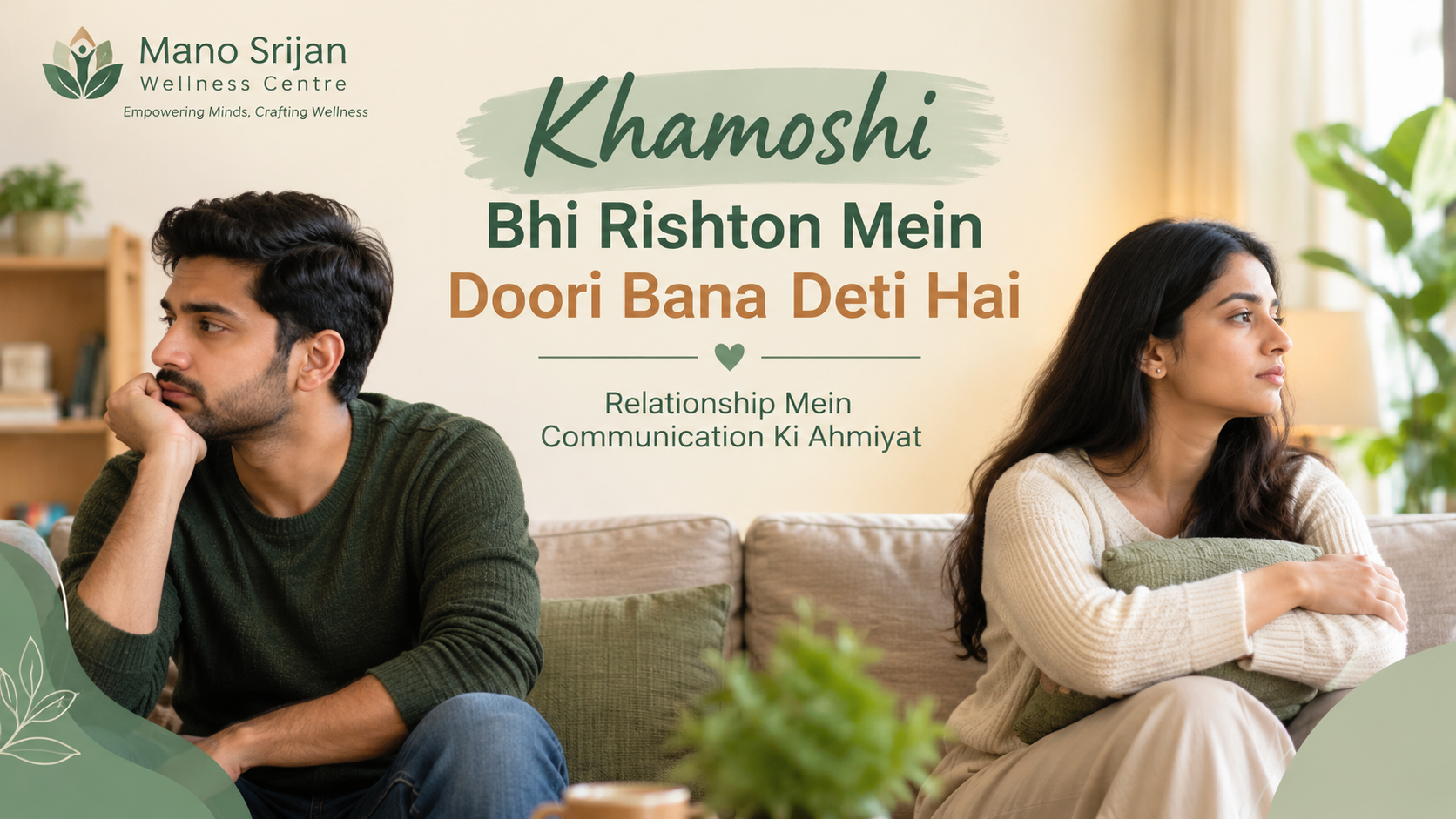
7. Emotional Distance and Silence: When Couples Stop Talking
Not every relationship conflict involves shouting or arguments.
Sometimes, prolonged silence can also create emotional distance.
Some people react immediately during disagreements, while others withdraw because they need time to process their emotions.
Taking a break to calm down can be healthy. However, using silence to punish, control, or repeatedly ignore a partner can damage emotional security.
After a serious argument, husband stops talking to wife for several hours.
The wife repeatedly asks what is wrong, but the husband does not respond.
Wife begins feeling that her emotions do not matter.
Husband believes that talking will only lead to another argument.
Both become increasingly frustrated.
In such situations, taking a temporary break may help, but it is important to communicate the need for that break.
Husband could say:
"I am feeling overwhelmed right now. I need some time to calm down. Let's sit together and discuss this after half an hour."
Returning to the conversation at the agreed time is equally important.
This helps both partners understand that the purpose of the break is emotional regulation, not avoidance.
8. Digital Distractions and Their Impact on Marriage
Mobile phones and social media have become an important part of modern life.
Although technology helps people stay connected, excessive use can reduce meaningful interactions between couples.
Imagine Husband and Wife sitting together after dinner.
Husband is watching videos on his phone, while Wife is scrolling through social media.
They are physically present in the same room but are not emotionally connecting.
Wife feels that Husband does not spend enough time with her.
Husband feels that Wife is equally distracted by her phone.
The problem is not technology itself. The problem arises when digital activities repeatedly replace opportunities for meaningful conversations.
Practical Ways to Improve Connection:
1. Keep mobile phones away during meals.
2. Spend some time talking before going to bed.
3. Plan one shared activity every week.
4. Give each other undivided attention during important conversations.
5. Discuss healthy boundaries around mobile usage.
Being physically present is not always enough. Emotional presence is equally important.
9. Five Practical Conflict Resolution Techniques for Couples
How can couples like Husband and Wife handle disagreements more effectively?
Here are five practical techniques that can help.
Technique 1: Express Feelings Instead of Blaming
Saying, "You don't care about me," may make your partner defensive.
Instead, try saying:
"I feel lonely when we don't spend time together. I would like us to make some time for each other."
Expressing emotions clearly can encourage more constructive conversations.
Technique 2: Listen to Understand, Not Just to Respond
When Wife shares her concerns, Husband does not need to immediately defend himself.
He can first say:
"I want to understand what hurt you the most."
Similarly, when Husband discusses his work pressure, Wife can allow him to complete his thoughts.
Listening does not mean agreeing with everything. It means making a genuine effort to understand your partner's experience.
Technique 3: Keep the Discussion Focused on One Problem
If the disagreement is about household responsibilities, avoid bringing unrelated issues into the conversation.
Instead of saying, "You never help me," discuss which responsibilities need to be shared and how.
For example, Husband may take responsibility for cleaning the kitchen after dinner, while Wife manages other household tasks.
The division should depend on both partners' circumstances and mutual agreement.
Technique 4: Take a Break When Emotions Become Overwhelming
If both partners are extremely angry, continuing the discussion may make things worse.
Take some time to calm down and agree on when to resume the conversation.
The purpose of a break should be to regulate emotions, not to avoid the issue indefinitely.
Technique 5: Increase Positive Interactions
Couples often spend so much time discussing problems that they forget to appreciate the positive aspects of their relationship.
Husband can appreciate Wife's efforts, while Wife can acknowledge Husband's hard work and support.
Small gestures such as saying thank you, asking about each other's day, spending time together, and offering emotional support can strengthen connection.
These techniques work best when both partners participate willingly and consistently.
10. Can Every Relationship Problem Be Solved?
It is important to understand that every marital problem does not have the same solution.
Some problems are practical, such as household responsibilities, financial planning, time management, and parenting decisions.
These can often be addressed through clear communication and mutual agreements.
However, some differences are connected to personality, personal values, family backgrounds, and individual preferences.
For example, Husband enjoys social gatherings, whereas Wife prefers spending time in a peaceful environment.
They do not need to completely change their personalities to make the relationship work.
Instead, they can create a balance that allows Husband to enjoy social activities while Wife gets sufficient time for herself.
The goal is not to eliminate every difference but to learn how to respect those differences.
However, violence, threats, coercion, repeated humiliation, and controlling behaviour should never be treated as normal marital disagreements.
In such situations, personal safety and professional support must be prioritised.
If couples repeatedly experience the same conflicts, struggle to communicate, or feel increasingly disconnected, seeking help from a qualified couples counsellor or mental health professional may be beneficial.
Relationship counselling is not about blaming one partner. It helps couples understand unhealthy interaction patterns, improve communication, and develop healthier ways of managing disagreements.
11. How Husband and Wife Started Improving Their Relationship
After experiencing repeated arguments, Husband and Wife gradually realised that they were spending more time proving themselves right than understanding each other's emotions.
They decided to make a few changes.
Husband started spending some time talking to Wife after returning from work.
He also began understanding that family responsibilities are not limited to financial contributions.
Wife started expressing her expectations more clearly instead of expecting Husband to understand everything automatically.
She also tried to understand Husband's professional stress without ignoring her own emotional needs.
Both agreed that during arguments, they would avoid insulting each other's family members, personalities, or bringing up unrelated past mistakes.
Whenever disagreements became intense, they took a short break and returned to the discussion after calming down.
Their differences did not disappear completely.
They still disagreed sometimes, but they gradually learned how to maintain respect even when they had different opinions.
Husband understood that Wife needed emotional presence, not just financial security.
Wife understood that Husband sometimes needed time to process stress, although open communication remained important.
Both realised that maintaining a healthy relationship requires shared responsibility.
Their experience highlights an important truth: A healthy relationship is not one without arguments. It is one where partners learn to reconnect, understand each other, and work through disagreements together.
Note: Husband and Wife are fictional characters used to illustrate common relationship challenges.
Conclusion: Strong Relationships Require Understanding, Not Winning
Marriage goes through different phases. Work pressure, financial responsibilities, parenting, family expectations, and personal needs can influence the quality of a relationship.
However, the strength of a marriage is not determined only by how frequently couples argue.
What matters is how they handle disagreements, respect each other's emotions, and make efforts to find solutions together.
The story of Husband and Wife reminds us that two people can love each other and still become emotionally distant because of communication gaps, unmet expectations, and misunderstandings.
Improving a relationship does not always require a major decision.
Sometimes, listening carefully, acknowledging mistakes, spending quality time together, and expressing needs clearly can become meaningful first steps.
Remember, a healthy marriage requires respect for both partners' emotions, needs, and boundaries.
It is not healthy conflict resolution if only one partner is expected to compromise, adjust, or tolerate every mistake.
If Husband has the right to express his feelings, Wife has the same right.
If Wife's emotions deserve attention, Husband's circumstances also deserve understanding.
Mutual respect means creating space for both partners to be heard and sharing responsibility for finding solutions.
A strong relationship is not one where couples never disagree. It is one where, even during disagreements, they choose to see each other as partners rather than enemies.
Relationships may begin with love, but they remain strong through communication, respect, trust, emotional understanding, and continuous efforts from both partners.