- 03 Aug 2026
- Psy. Ashish Pandey
OCD Is Real. Recovery Is Possible.
When people hear the term "Obsessive-Compulsive Disorder" (OCD), they often imagine someone who is extremely clean, organized, or perfectionistic. Statements like "I'm so OCD about keeping my room clean" have become common in everyday conversations. While these comments may seem harmless, they create misconceptions about what OCD truly is.
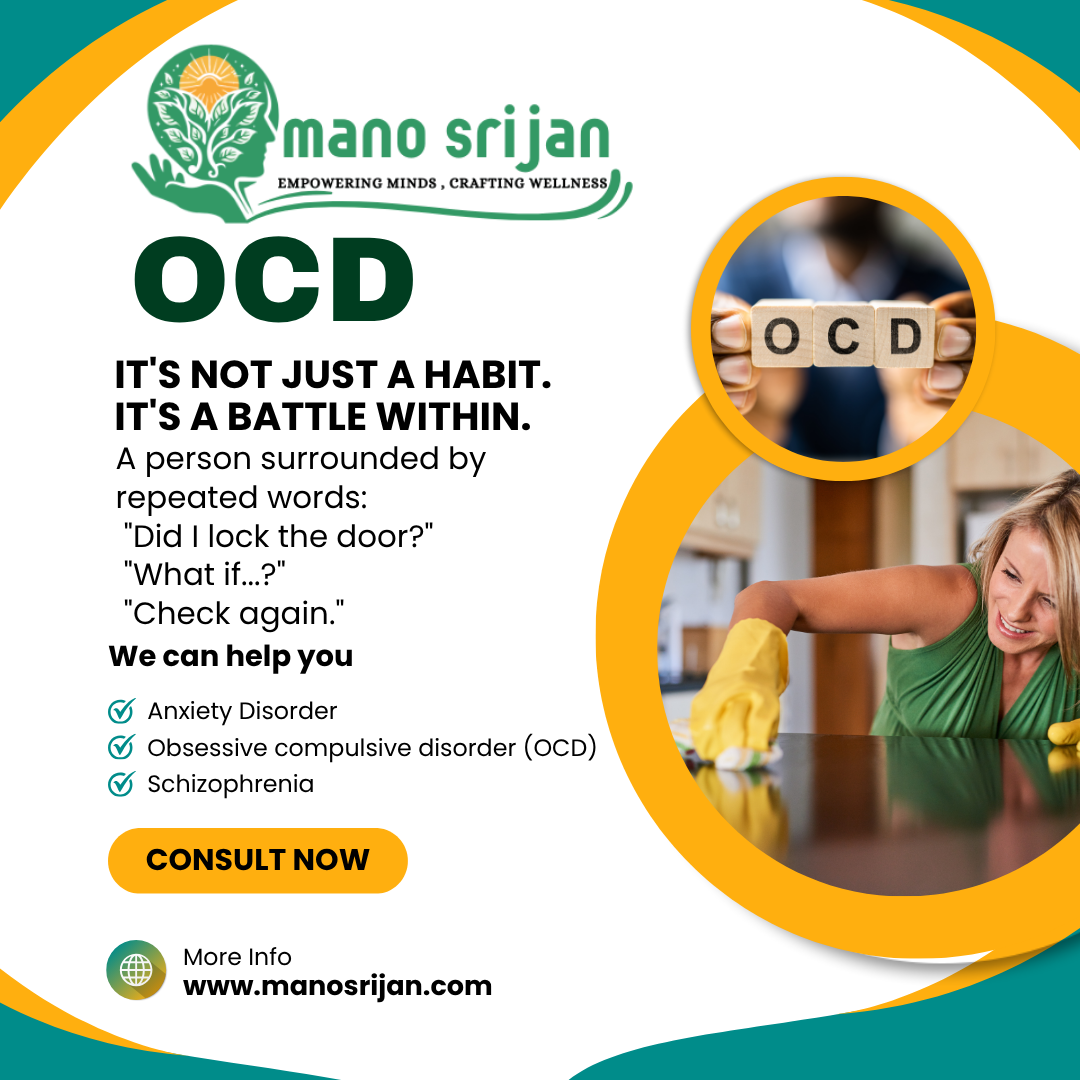
Obsessive-Compulsive Disorder (OCD) is not a personality trait, a preference for cleanliness, or simply a habit. It is a mental health condition characterized by persistent, intrusive thoughts (obsessions) and repetitive behaviors or mental acts (compulsions) performed to reduce anxiety. These symptoms can consume hours of a person's day and significantly interfere with work, relationships, education, and overall quality of life.
OCD affects millions of people worldwide, regardless of age, gender, culture, or background. The condition often begins during adolescence or early adulthood, although it can occur in childhood or later in life. The encouraging news is that OCD is treatable, and many individuals experience significant improvement with evidence-based therapies and appropriate support.
What is OCD?
Obsessive-Compulsive Disorder is a chronic mental health disorder involving two key components:
1. Obsessions
Obsessions are unwanted, intrusive, repetitive thoughts, images, or urges that repeatedly enter a person's mind despite attempts to ignore or suppress them.
These thoughts are distressing because they are inconsistent with the person's values or desires. Importantly, individuals with OCD usually recognize that these thoughts are irrational or excessive, yet they feel unable to stop them.
Examples include:
- Fear of contamination
- Fear of harming oneself or others
- Fear of making mistakes
- Excessive doubts
- Need for certainty
- Intrusive violent thoughts
- Religious or moral fears
- Sexual intrusive thoughts
- Fear of losing control
These thoughts generate intense anxiety and emotional discomfort.
2. Compulsions
Compulsions are repetitive behaviors or mental rituals performed to reduce the anxiety caused by obsessive thoughts.
Examples include:
- Repeated hand washing
- Checking locks repeatedly
- Re-reading messages
- Counting repeatedly
- Arranging objects symmetrically
- Repeating prayers excessively
- Seeking reassurance
- Mental reviewing
- Touching objects repeatedly
Compulsions provide temporary relief but strengthen the OCD cycle over time.
The OCD Cycle
The disorder follows a predictable cycle:
Intrusive Thought
↓
Anxiety
↓
Compulsive Behavior
↓
Temporary Relief
↓
Obsession Returns
↓
Cycle Repeats
Each time a person performs a compulsion, the brain learns that the ritual reduced anxiety, making future obsessions more likely.
Common Types of OCD
Although OCD varies greatly among individuals, several common themes are frequently observed.
1. Contamination OCD
Individuals fear germs, dirt, chemicals, or illness.
Common compulsions include:
- Excessive washing
- Avoiding public places
- Constant sanitizing
- Avoiding touching objects
2. Checking OCD
Persistent doubts lead to repeated checking.
Examples:
- Checking doors repeatedly
- Gas stove
- Electrical appliances
- Vehicle locks
- Emails and messages
3. Symmetry and Order OCD
Individuals feel intense discomfort when objects are not perfectly aligned.
Compulsions include:
- Rearranging items
- Counting
- Organizing repeatedly
4. Harm OCD
The person experiences frightening thoughts about accidentally harming someone they love.
Importantly:
Having intrusive thoughts does NOT mean the individual wants to act on them.
These thoughts are unwanted and deeply distressing.
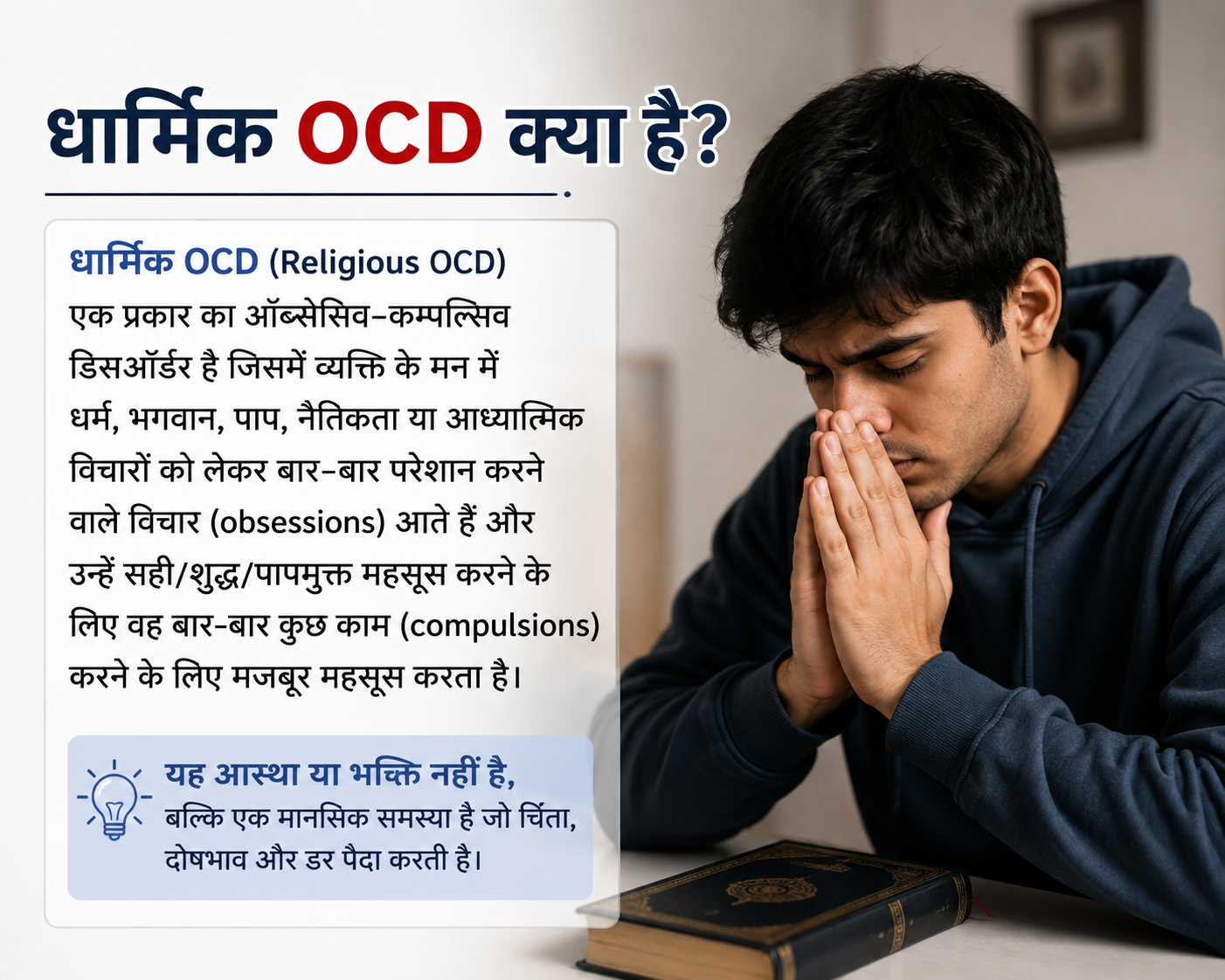
5. Religious or Moral OCD (Scrupulosity)
People worry excessively about committing sins, offending God, or behaving immorally.
Common compulsions include:
- Excessive praying
- Seeking reassurance
- Confession rituals
6. Relationship OCD (ROCD)
Persistent doubts about relationships:
- "Do I really love my partner?"
- "What if this relationship is wrong?"
- "Am I with the right person?"
Symptoms of OCD
Symptoms may include:
- Intrusive unwanted thoughts
- Constant doubts
- Excessive guilt
- Repeated checking
- Frequent hand washing
- Fear of contamination
- Need for perfection
- Counting rituals
- Mental reviewing
- Avoidance behaviors
- Seeking reassurance
- Difficulty making decisions
- Anxiety
- Sleep disturbances
What Causes OCD?
There is no single cause. Researchers believe OCD develops through a combination of biological, psychological, and environmental factors.
Biological Factors
Research suggests differences in brain circuits involved in decision-making, habit formation, and threat detection.
Neurotransmitters such as serotonin may also play a role.
Genetics
OCD tends to occur more frequently in families.
Having a close relative with OCD slightly increases the likelihood, though genetics alone do not determine whether someone will develop the disorder.
Psychological Factors
Certain cognitive patterns contribute to OCD, including:
- Overestimating danger
- Inflated responsibility
- Need for certainty
- Perfectionism
- Intolerance of uncertainty
Environmental Factors
Stressful life events may trigger or worsen symptoms.
Examples include:
- Academic pressure
- Relationship conflicts
- Childbirth
- Loss of loved ones
- Illness
- Major life transitions
Common Myths About OCD
Myth 1
"OCD means loving cleanliness."
Reality:
Many individuals with OCD are not focused on cleanliness at all.
Myth 2
"People with OCD can simply stop."
Reality:
OCD is not a choice. Stopping compulsions without treatment often causes overwhelming anxiety.
Myth 3
"OCD is rare."
Reality:
OCD affects millions of people worldwide.
Myth 4
"Everyone is a little OCD."
Reality:
Being organized is not the same as having a clinical disorder.
Myth 5
"OCD is just a bad habit."
Reality:
It is a recognized mental health disorder that requires understanding and evidence-based care.
Impact of OCD
Untreated OCD may affect nearly every area of life.
Personal Life
- Constant anxiety
- Exhaustion
- Low confidence
Family Relationships
Family members may unknowingly participate in compulsions by providing repeated reassurance or helping avoid feared situations.
Education
Students may struggle because rituals consume study time or interfere with concentration.
Workplace
Employees may experience:
- Reduced productivity
- Repeated checking
- Difficulty completing tasks
- Increased stress
Diagnosis
A qualified mental health professional diagnoses OCD through:
- Clinical interview
- Symptom assessment
- Functional impairment evaluation
- Duration and severity assessment
- Differential diagnosis to rule out other conditions
Diagnosis follows established criteria such as those in the DSM-5-TR and ICD-11, ensuring that symptoms are persistent, distressing, and significantly interfere with daily functioning.
Treatment
The good news is that OCD is highly treatable.
1. Cognitive Behaviour Therapy (CBT)
CBT helps individuals identify and challenge unhelpful thinking patterns while developing healthier ways to respond to anxiety.
2. Exposure and Response Prevention (ERP)
ERP is considered one of the most effective psychological treatments for OCD.
During ERP:
- Individuals gradually face feared situations.
- They practice resisting compulsive behaviors.
- Anxiety naturally decreases over time without performing rituals.
Repeated practice weakens the OCD cycle and builds confidence.
3. Medication
For some individuals, psychiatrists may prescribe medications—most commonly selective serotonin reuptake inhibitors (SSRIs)—especially when symptoms are moderate to severe. Medication decisions should always be made in consultation with a qualified medical professional.
4. Family Support
Family members can support recovery by:
- Learning about OCD
- Avoiding participation in compulsions
- Encouraging treatment
- Providing empathy instead of criticism
Self-Help Strategies
While self-help cannot replace professional treatment, it can complement recovery:
- Practice mindfulness
- Follow a regular sleep schedule
- Exercise regularly
- Reduce excessive reassurance-seeking
- Learn stress management techniques
- Keep a symptom journal
- Celebrate small victories
- Stay consistent with therapy recommendations
When Should You Seek Professional Help?
Consider seeking help if:
- Intrusive thoughts feel uncontrollable.
- Rituals consume more than an hour each day.
- Anxiety interferes with work, school, or relationships.
- You avoid important activities because of fears or compulsions.
- Symptoms are causing significant distress.
Early intervention often leads to better outcomes.
Living with OCD
Recovery does not mean never having an intrusive thought again. Instead, it means learning to respond differently—recognizing thoughts without letting them dictate behavior. With appropriate treatment, many people regain control of their lives, pursue their goals, strengthen relationships, and enjoy improved well-being.
Final Thoughts
Obsessive-Compulsive Disorder is an invisible struggle that often goes unnoticed by others. What appears to be "just checking" or "just cleaning" may actually reflect hours of exhausting anxiety and mental conflict.
Understanding OCD begins with replacing myths with facts and judgment with compassion. If you or someone you know is experiencing persistent intrusive thoughts and repetitive behaviors, remember that help is available. Evidence-based treatments such as CBT and ERP, along with professional guidance and family support, can make a profound difference.
OCD is real. But so is recovery.
About Mano Srijan Wellness Centre
Mano Srijan Wellness Centre is dedicated to promoting mental well-being through compassionate, evidence-based psychological services. Our team provides psychological assessment, counseling, CBT, ERP, psychoeducation, stress management, relationship counseling, and emotional wellness programs to support individuals and families on their journey toward better mental health.