- 05 Aug 2026
- Psy. Ashish Pandey
Trust After Betrayal: A Complete Guide to Infidelity in Relationships
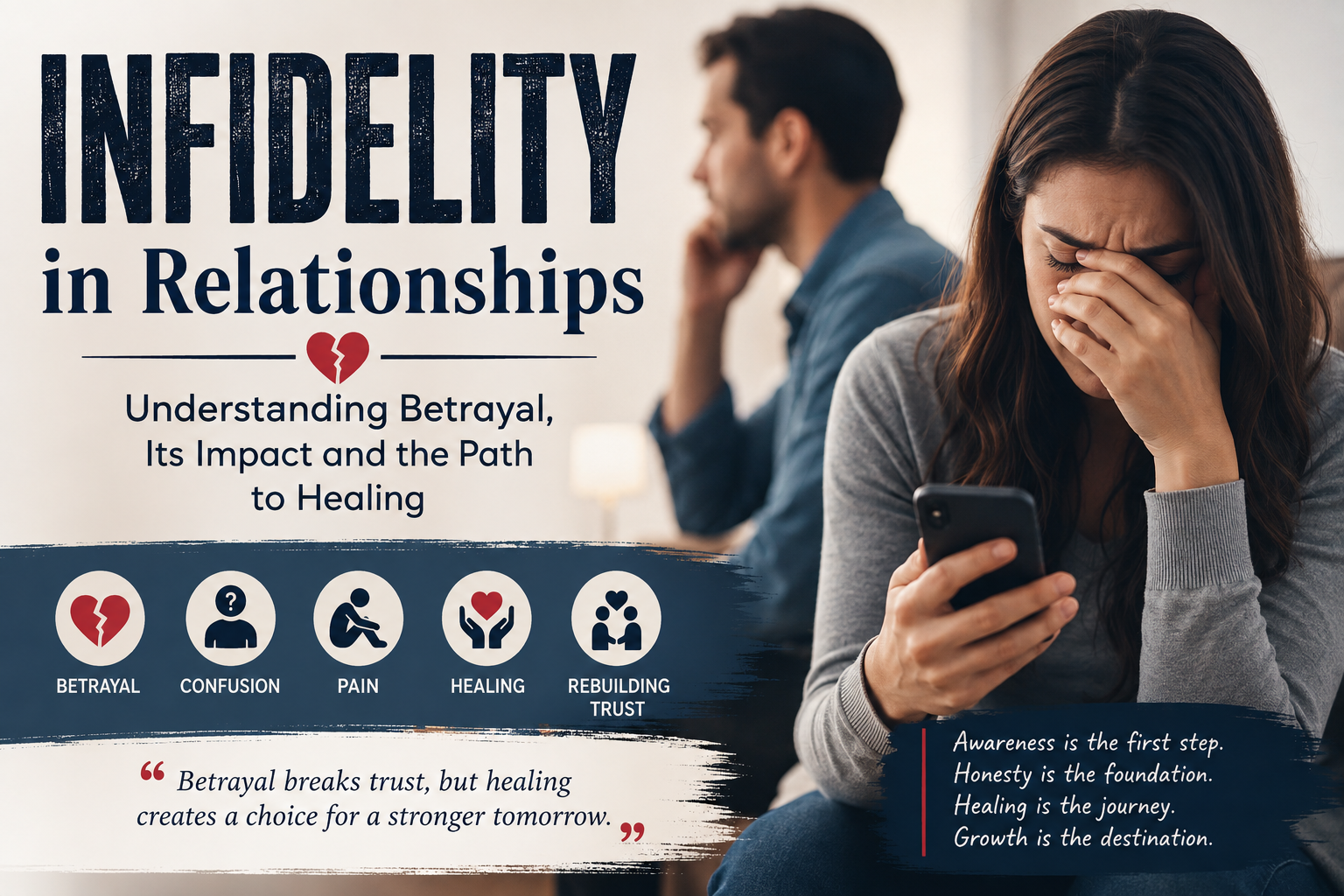
Infidelity in
Relationships: Understanding Betrayal, Its Causes, Impact, and the Path to
Healing
Trust is
the foundation of every healthy relationship. When trust is broken through
infidelity, it can leave both partners feeling devastated, confused, angry, and
emotionally shattered. Infidelity is not just about physical intimacy with
someone outside the relationship—it can also involve emotional connections,
secrecy, deception, and broken commitments.
While
many relationships end after betrayal, others survive and become stronger
through honest communication, accountability, and professional support. Understanding
why infidelity happens and how couples can heal is essential for anyone
experiencing or trying to understand relationship betrayal.
What is infidelity?
Infidelity
refers to violating the agreed-upon boundaries of a committed relationship by
becoming romantically, emotionally, or sexually involved with another person
without the partner's knowledge or consent.
The
definition of infidelity varies across couples depending on their relationship
agreements, cultural values, and personal expectations.
At its
core, infidelity involves:
- Betrayal of trust
- Secrecy
- Dishonesty
- Emotional or physical
intimacy outside the relationship
Types of Infidelity
1. Physical Infidelity
This
involves sexual or physical intimacy with someone other than one's committed
partner.
Examples
include:
- Kissing
- Sexual contact
- One-night stands
- Ongoing affairs
2. Emotional Infidelity
Emotional
cheating occurs when someone forms a deep emotional bond with another person
that replaces emotional intimacy with their partner.
Signs
include:
- Sharing personal secrets
- Seeking emotional comfort
elsewhere
- Prioritizing another person
emotionally
- Feeling more connected to
someone else than one's partner
Many
therapists consider emotional affairs as equally painful as physical affairs.
3. Digital or Online Infidelity
Technology
has created new forms of betrayal.
Examples:
- Secret texting
- Sexting
- Dating apps
- Romantic social media
interactions
- Online affairs
- Secret video calls
Many
relationships are damaged without any physical contact occurring.
4. Financial Infidelity
Financial
secrecy can also violate relationship trust.
Examples
include:
- Hidden bank accounts
- Secret debts
- Gambling
- Spending money on another
romantic partner
- Lying about income
5. Micro-Cheating
These are
subtle behaviors that may indicate emotional investment outside the
relationship.
Examples:
- Flirting regularly
- Secret conversations
- Hiding messages
- Keeping someone as a
"backup option"
Why Do People Cheat?
Infidelity
rarely happens because of one single reason. Usually, multiple emotional,
psychological, relational, and situational factors interact.
1. Emotional Disconnection
When
partners feel ignored, unappreciated, lonely, or emotionally neglected, they
may become vulnerable to outside emotional connections.
2. Poor Communication
Unresolved
conflicts, lack of emotional expression, and avoidance of difficult conversations
increase relationship dissatisfaction.
3. Unmet Needs
Some
individuals report unmet needs related to:
- Affection
- Appreciation
- Validation
- Sexual intimacy
- Emotional closeness
- Companionship
However,
unmet needs explain vulnerability—they do not justify deception.
4. Opportunity
Easy
access through:
- Social media
- Workplace interactions
- Travel
- Old partners reconnecting
online
can
increase temptation.
5.
Personal Factors
Certain
personal characteristics may increase risk, including:
- Poor impulse control
- Low commitment
- Difficulty regulating
emotions
- Fear of intimacy
- Low empathy
- Sensation-seeking
These
factors are not deterministic, and many people with these traits remain
faithful.
6. Relationship Dissatisfaction
Long-term
unresolved issues such as
- Constant conflict
- Lack of intimacy
- Feeling emotionally
disconnected
- Feeling trapped
may
contribute to increased vulnerability.
7. Life
Transitions
Major
life events may increase emotional vulnerability:
- Pregnancy
- New parenthood
- Midlife crisis
- Career changes
- Grief
- Empty nest
- Retirement
Psychological Impact of
Infidelity
On the Betrayed Partner
Many
betrayed partners experience symptoms similar to trauma.
Common
reactions include:
- Shock
- Anger
- Anxiety
- Depression
- Intrusive thoughts
- Sleep disturbances
- Loss of appetite
- Hypervigilance
- Reduced self-esteem
- Difficulty trusting others
- Emotional numbness
Some
develop what therapists call post-infidelity stress, with trauma-like
symptoms.
On the Partner Who Cheated
Not
everyone who cheats feels the same, but many experience:
- Guilt
- Shame
- Fear of losing the
relationship
- Anxiety
- Identity conflict
- Emotional confusion
Others
may minimize or rationalize their behavior, which can delay healing.
Warning Signs That a
Relationship May Be at Risk
Although
no sign proves infidelity, changes worth discussing include:
- Increased secrecy
- Password changes
- Emotional withdrawal
- Sudden criticism of the
partner
- Less intimacy
- Unexplained absences
- Excessive phone use
- Defensive behavior
- Reduced communication
- Loss of affection
These
signs can also occur for reasons unrelated to cheating, so open communication
is important before reaching conclusions.
Can a Relationship Survive
Infidelity?
Yes.
Research
and clinical experience show that some couples recover after infidelity, while
others decide to separate. Recovery depends on several factors, including:
- Genuine remorse from the
partner who cheated
- Honesty and transparency
- Willingness to rebuild trust
- Mutual commitment
- Effective communication
- Professional counselling
when needed
Healing
is possible, but it usually takes time and sustained effort.
Steps Toward Healing
1. Stop the Affair
Recovery
cannot begin while the affair continues.
2. Take Responsibility
The
partner who cheated should acknowledge their actions without blaming the
betrayed partner.
3. Allow Emotional Expression
The
betrayed partner needs space to express grief, anger, confusion, and sadness
safely.
4. Practice Honest Communication
Open
conversations about what happened, feelings, and future expectations are
essential.
5. Rebuild Trust Gradually
Trust
returns through consistent actions rather than promises.
Examples
include:
- Transparency
- Reliability
- Keeping commitments
- Respecting agreed boundaries
6. Understand the Underlying Issues
Exploring
the relationship dynamics and personal vulnerabilities that contributed to the
affair can help prevent future problems, while recognizing that responsibility
for cheating remains with the person who chose to be unfaithful.
7. Seek Professional Help
Couples
therapy can help partners:
- Improve communication
- Process emotional pain
- Rebuild trust
- Resolve unresolved conflicts
- Make informed decisions
about the future
Preventing Infidelity
Healthy
relationships require ongoing care.
Helpful
practices include:
- Prioritize quality time
- Express appreciation
regularly
- Discuss expectations openly
- Maintain emotional intimacy
- Address conflicts early
- Set clear boundaries with
others
- Be transparent with
technology use if mutually agreed
- Continue growing together as
partners
Myths About Infidelity
Myth: Only unhappy people cheat.
Reality: Infidelity can occur in both distressed and seemingly satisfied
relationships.
Myth: Emotional affairs are harmless.
Reality: Emotional affairs can deeply damage trust and intimacy.
Myth: Once a cheater, always a
cheater.
Reality: Some people repeat patterns, while others take responsibility,
make meaningful changes, and remain faithful. Change depends on insight,
accountability, and sustained effort.
Myth: Infidelity always ends a
relationship.
Reality: Some couples separate, while others rebuild stronger
relationships through honest work and support.
When Should You Seek
Professional Help?
Consider
seeking counselling if:
- You cannot stop thinking
about the affair.
- Communication always becomes
hostile or shuts down.
- Trust feels impossible to
rebuild.
- Either partner experiences
severe anxiety or depression.
- There is repeated
infidelity.
- You are unsure whether to
stay or leave the relationship.
- Trauma symptoms interfere
with daily life.
Professional
guidance can provide a structured and supportive environment for healing,
whether the goal is reconciliation or an informed decision to separate.
Conclusion
Infidelity
is one of the most painful experiences a couple can face because it strikes at
the heart of trust, safety, and emotional connection. While the journey after
betrayal is often filled with grief, anger, and uncertainty, it can also become
an opportunity for growth, accountability, and deeper understanding. Recovery
is not about forgetting what happened—it is about deciding, individually or
together, how to move forward in a healthier and more honest way.
Whether a
relationship continues or ends, healing begins with truth, compassion, and a
commitment to emotional well-being. With time, self-reflection, and appropriate
support, individuals and couples can rebuild confidence, regain emotional
balance, and create healthier relationships in the future.