- 23 Jul 2026
- Psy. Ashish Pandey
Screen Time vs. Digital Addiction: What's the Difference?
Understanding When Technology Helps You—and When It Starts Controlling You
In today's digital world, screens have become an inseparable part of our daily lives. Whether it's attending online classes, working from home, shopping, connecting with loved ones, or simply relaxing with entertainment, we spend several hours each day looking at a screen. This has led many people to ask an important question: Is spending a lot of time on screens the same as being addicted to them?
The answer is no.
Although the terms "screen time" and "digital addiction" are often used interchangeably, they are very different. Understanding this difference is essential for protecting your mental health, productivity, relationships, and overall well-being.
What is Screen Time?
"Screen time" refers to the total amount of time you spend using digital devices such as
- Smartphones
- Tablets
- Computers
- Laptops
- Television
- Gaming consoles
Screen time itself is not good or bad. It simply measures how much time you spend using electronic screens.
For example, a software engineer may spend eight hours on a computer for work, a college student may attend online lectures for several hours, and a designer may create digital content all day. These individuals have high screen time, but they are not necessarily addicted.
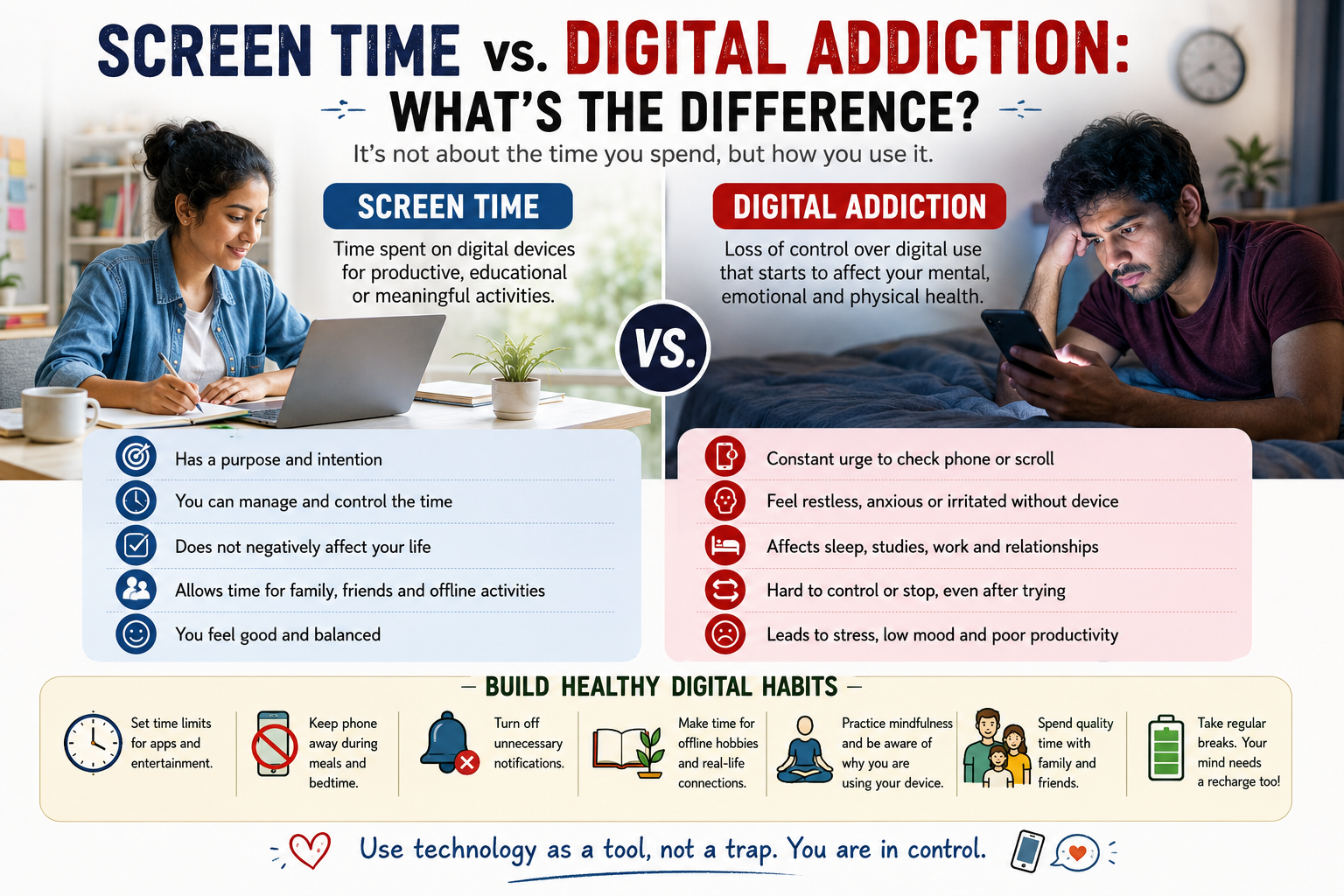
The purpose of screen use matters more than the number of hours.
What is digital addiction?
Digital addiction is a behavioral condition in which a person loses control over their use of digital devices or online platforms. Instead of using technology as a tool, the individual begins to depend on it emotionally and psychologically.
A person experiencing digital addiction often continues using their phone or other devices despite knowing that it is negatively affecting their life.
Unlike high screen time, digital addiction involves loss of control.
The Biggest Difference: Time vs. Control
Many people assume that anyone spending six or seven hours on a phone is addicted.
This is not always true.
Imagine these two examples:
Person A
- Uses a laptop for eight hours at work.
- Takes regular breaks.
- Can switch off devices after work.
- Enjoys hobbies, exercise, and family time.
Person B
- Uses a phone for four hours mainly scrolling social media.
- Checks notifications every few minutes.
- Feels anxious without the phone.
- Sleeps late because of endless scrolling.
Although Person A has higher screen time, Person B is more likely experiencing digital addiction because the problem is compulsive behavior, not simply duration.
Signs of Healthy Screen Use
Healthy technology use usually includes the following:
- Using devices with a specific purpose.
- Taking regular breaks.
- Being able to stop when needed.
- Maintaining healthy sleep habits.
- Spending quality time with family and friends.
- Having hobbies beyond digital devices.
- Feeling comfortable being offline.
Technology becomes a helpful tool rather than something that controls your life.
Warning Signs of Digital Addiction
Digital addiction may be present if you notice several of these signs:
1. Constant Phone Checking
You unlock your phone repeatedly even without receiving notifications.
2. Anxiety Without Your Device
You feel restless, irritated, or uncomfortable when your phone battery is low or when you forget your device.
3. Loss of Time
You plan to use your phone for ten minutes but continue scrolling for hours.
4. Sleep Problems
Late-night scrolling delays sleep and reduces sleep quality.
5. Reduced Productivity
Important work, studies, or responsibilities are delayed because of excessive digital use.
6. Relationship Problems
Family members complain that you are always on your phone and not fully present during conversations.
7. Failed Attempts to Reduce Usage
You decide to limit your phone use but repeatedly return to old habits.
Why Does Digital Addiction Develop?
Digital platforms are intentionally designed to keep users engaged.
Several psychological factors contribute:
Dopamine Rewards
Every notification, like, message, or new video gives the brain a small reward, encouraging repeated use.
Fear of Missing Out (FOMO)
People worry they might miss important updates, conversations, or trends.
Instant Gratification
Digital content provides immediate entertainment with very little effort.
Stress Escape
Many people use their phones to avoid stress, loneliness, anxiety, or boredom.
Over time, this coping strategy can become habitual and difficult to control.
Effects on Mental Health
Research suggests problematic digital use may contribute to:
- Increased anxiety
- Depression
- Poor concentration
- Reduced productivity
- Low self-esteem
- Sleep disturbances
- Emotional exhaustion
It is important to note that technology itself is not harmful. The problem arises when it replaces healthy routines, real-life relationships, and emotional regulation.
How to Maintain Healthy Digital Habits
Here are practical ways to enjoy technology without becoming dependent on it:
Set Daily Limits
Track your screen time and create realistic boundaries for entertainment apps.
Keep Phone-Free Zones
Avoid using phones during meals, family conversations, and before bedtime.
Disable Unnecessary Notifications
Reducing interruptions decreases the urge to check your phone constantly.
Follow the 20-20-20 rule.
Every 20 minutes, look at something 20 feet away for 20 seconds to reduce eye strain.
Schedule Offline Activities
Exercise, reading, hobbies, meditation, and outdoor walks help restore balance.
Practice Mindful Technology Use
Before unlocking your phone, ask yourself:
"Why am I opening it?"
If there is no clear reason, you may be acting out of habit rather than necessity.
Self-Assessment Questions
Ask yourself honestly:
- Can I stay away from my phone for two hours without discomfort?
- Do I check my phone automatically when I'm bored?
- Has my screen use affected my sleep?
- Have my relationships suffered because of my phone?
- Do I feel guilty about the amount of time I spend online?
- Have I tried to reduce screen time but failed repeatedly?
If you answered "Yes" to several of these questions, it may be helpful to evaluate your digital habits more closely.
Final Thoughts
Technology has transformed our lives in remarkable ways. It helps us learn, communicate, work, and grow. The goal is not to eliminate screens, but to use them consciously.
Remember:
- High screen time means you spend many hours using digital devices.
- Digital addiction means your digital devices begin controlling your thoughts, emotions, and behavior.
The healthiest relationship with technology is one where you control the screen—not the other way around.
Creating mindful digital habits today can improve your mental health, strengthen relationships, increase productivity, and help you live a more balanced and fulfilling life.