- 22 Jul 2026
- Psy. Ashish Pandey
Relationship Conflict: Causes, Signs, and Healthy Ways to Resolve It
Relationship Conflict: Understanding the Problem Before Solving It
 6
6Relationship Conflict: It's Not You vs. Your Partner—It's Both of You vs. the Problem
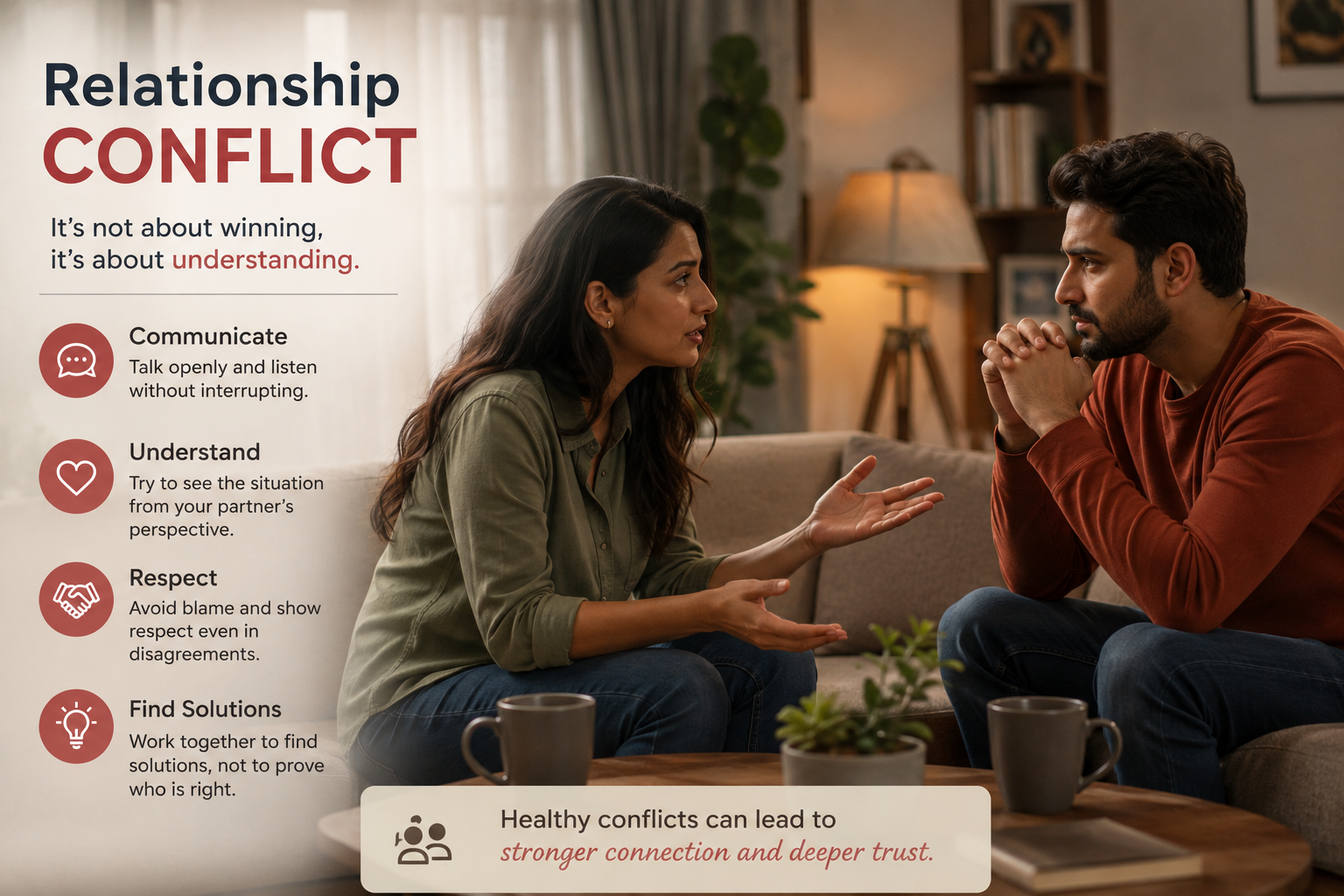
Every relationship experiences conflict. Whether it's about communication, finances, trust, family responsibilities, or unmet expectations, disagreements are a natural part of any close relationship. What determines the strength of a relationship isn't whether conflicts happen—it's how couples handle them.
Healthy conflict can lead to greater understanding, emotional intimacy, and stronger trust. Unhealthy conflict, however, can create emotional distance, resentment, and repeated arguments.
Common Causes of Relationship Conflict
1. Poor Communication
Many couples listen to respond rather than to understand. Interrupting, blaming, or making assumptions often leads to misunderstandings.
2. Unmet Expectations
Partners may expect love, support, appreciation, or attention without expressing these needs clearly.
3. Lack of Quality Time
Busy schedules, work pressure, and excessive screen time can reduce emotional connection.
4. Financial Stress
Differences in spending habits, saving priorities, or financial responsibilities can become a major source of conflict.
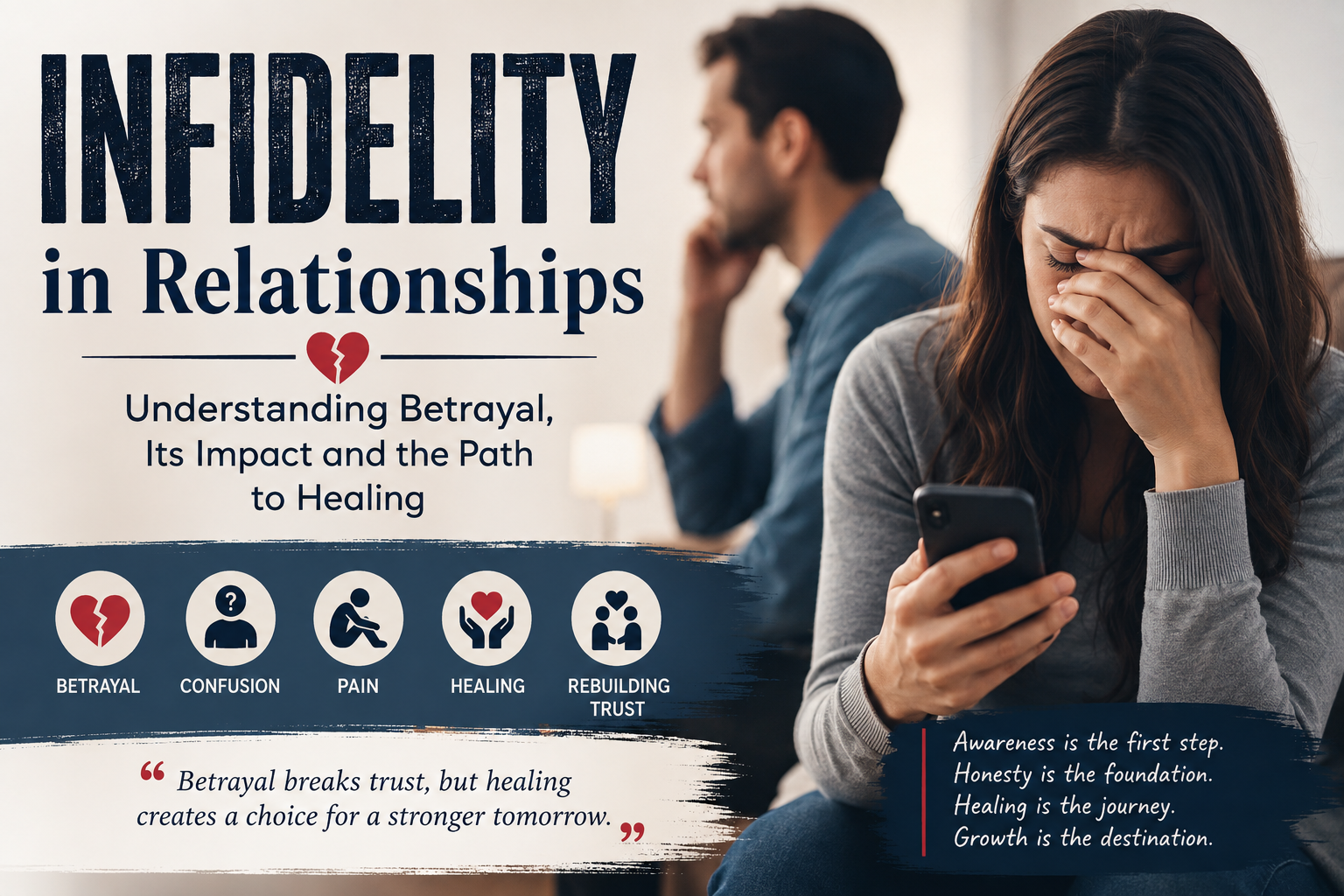
5. Trust Issues
Past betrayals, secrecy, jealousy, or broken promises can weaken emotional safety.
6. Different Conflict Styles
One partner may want to discuss issues immediately, while the other prefers to withdraw and process emotions first.
Signs That Conflict Is Becoming Unhealthy
- Constant criticism instead of constructive feedback
- Frequent blame and defensiveness
- Silent treatment or emotional withdrawal
- Bringing up past mistakes repeatedly
- Feeling unheard or emotionally unsafe
- Avoiding important conversations altogether
Healthy Ways to Resolve Relationship Conflict
✅ Listen Before Reacting
Focus on understanding your partner's perspective instead of preparing your response.
✅ Use "I" Statements
Instead of saying:
"You never care about me."
Try:
"I feel lonely when we don't spend time together."
✅ Stay Focused on One Issue
Avoid bringing up multiple past arguments during one discussion.
✅ Take a Break if Emotions Are High
A short pause helps both partners calm down and return with a clearer mindset.
✅ Validate Feelings
You don't have to agree with your partner to acknowledge their emotions.
Example:
"I understand why that upset you."
✅ Look for Solutions Together
Ask:
"What can we both do differently next time?"
When Professional Help Can Be Beneficial
Relationship counseling may help when:
- Arguments become repetitive.
- Communication consistently breaks down.
- Trust has been damaged.
- Emotional distance continues to grow.
- One or both partners feel hopeless about the relationship.
Seeking support is not a sign of failure—it is often a proactive step toward rebuilding understanding and connection.
Final Thoughts
Conflict is not the enemy of a relationship. Avoidance, disrespect, and poor communication are far more damaging than disagreement itself. Couples who approach conflicts with empathy, patience, and a willingness to understand each other often develop deeper trust and stronger emotional bonds.
A successful relationship isn't built on never fighting—it is built on learning how to repair, reconnect, and grow together after disagreements.