- 19 Mar 2026
- Psy. Ashish Pandey
Parenting Mistakes That Are Destroying Your Child’s Mental Health
Parenting for Mental Health: Building Emotionally Strong Children in a Changing World
Parenting today is not just about providing food, education, and discipline—it is increasingly about nurturing emotional resilience, psychological well-being, and a secure sense of self in children. As society becomes more competitive, digitally driven, and fast-paced, children are exposed to stressors much earlier than previous generations. In such an environment, mental health-focused parenting is no longer optional; it is essential.
This article explores how parents can consciously raise mentally healthy children by understanding emotional needs, fostering communication, building resilience, and creating a supportive home environment.
Understanding Mental Health in Children
Mental health in children refers to their emotional, psychological, and social well-being. It affects how they think, feel, behave, handle stress, relate to others, and make decisions. A mentally healthy child is not one who never struggles, but one who can cope with challenges, express emotions appropriately, and bounce back from difficulties.
Children, unlike adults, often lack the vocabulary to express their feelings. Instead, their distress may show up as irritability, withdrawal, aggression, poor academic performance, or even physical complaints like headaches and stomach aches.
Parents must therefore learn to “read between the lines” and recognize behavioral signals as emotional communication.
The Foundation: Emotional Safety at Home
The home environment plays a crucial role in shaping a child’s mental health. A child who feels safe, heard, and accepted at home develops stronger emotional stability.
Emotional safety means:
-
The child is not constantly judged or criticized.
-
Mistakes are treated as learning opportunities.
-
Feelings are validated, not dismissed.
For example, when a child says, “I am scared,” instead of responding with “Don’t be silly,” a mentally supportive response would be, “I understand you feel scared. Let’s talk about it.”
This simple shift teaches the child that emotions are normal and manageable, not something to suppress.
Communication: The Most Powerful Tool
Healthy communication is at the heart of mental well-being. Unfortunately, many families communicate only for instructions (“Do your homework,” “Eat your food”) rather than emotional connection.
To build a mentally strong child:
-
Practice active listening without interrupting.
-
Avoid immediate judgment or solutions.
-
Give full attention when your child speaks.
A useful technique is the “3-step response”:
-
Listen fully
-
Acknowledge feelings
-
Then guide or suggest
For instance, if a child says, “My friends ignored me today,” instead of jumping to advice, first acknowledge: “That must have hurt.” This builds trust and emotional openness.
The Role of Attachment and Bonding
Children who form secure attachments with their parents tend to have better emotional regulation and self-esteem. Attachment is not about being physically present all the time; it is about being emotionally available.
Small daily habits can strengthen bonding:
-
Spending quality one-on-one time
-
Sharing meals together
-
Bedtime conversations
-
Physical affection like hugs
These moments create a sense of belonging and security, which acts as a psychological buffer against stress.
Encouraging Emotional Expression
Many children grow up hearing phrases like:
-
“Boys don’t cry”
-
“Stop being so sensitive”
-
“You’re overreacting”
Such statements suppress emotional expression and can lead to internalized stress, anxiety, or anger issues later in life.
Instead, parents should:
-
Teach children to name their emotions (sad, angry, confused, excited)
-
Normalize all feelings, even negative ones
-
Encourage expression through talking, drawing, or writing
A child who understands their emotions can regulate them better.
Discipline vs Punishment: A Critical Difference
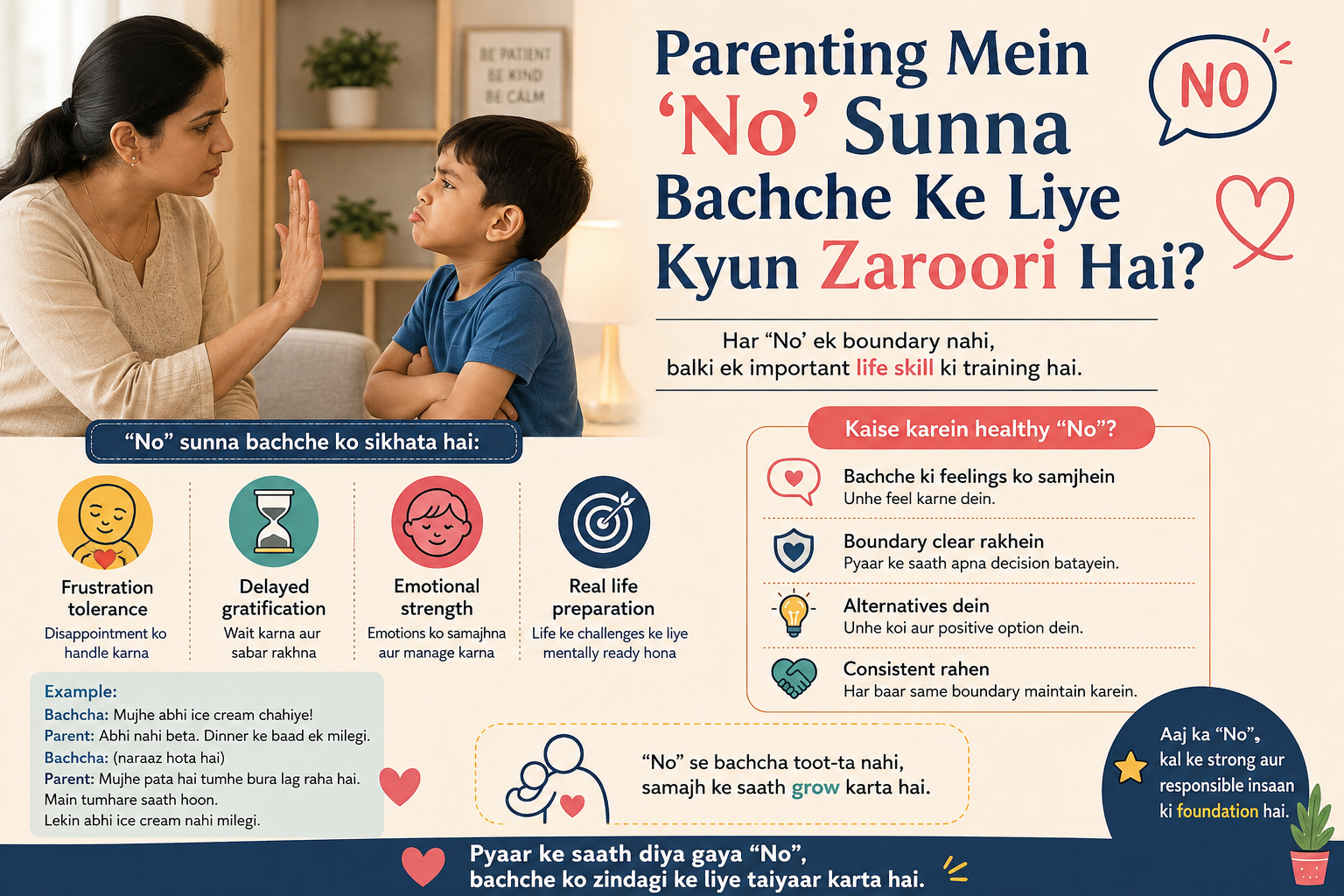
Traditional parenting often relies on punishment to control behavior. However, punishment may stop behavior temporarily but does not teach emotional understanding.
Discipline, on the other hand, is about teaching and guiding.
For example:
-
Punishment: “You are grounded for breaking the toy.”
-
Discipline: “Let’s understand why you broke it and how we can handle anger better next time.”
Effective discipline involves:
-
Explaining consequences
-
Setting clear boundaries
-
Teaching problem-solving skills
This approach promotes responsibility without damaging self-esteem.
Managing Academic Pressure
In many households, academic success is given top priority. While education is important, excessive pressure can harm mental health.
Children may develop:
-
Fear of failure
-
Anxiety disorders
-
Low self-worth tied to performance
Parents should focus on effort rather than results. Instead of asking, “What marks did you get?” try asking, “What did you learn today?”
Encouraging curiosity, creativity, and intrinsic motivation creates a healthier relationship with learning.
Digital Influence and Mental Health
Today’s children are growing up in a digital world. While technology offers many benefits, excessive screen time and social media exposure can negatively affect mental health.
Common issues include:
-
Reduced attention span
-
Sleep disturbances
-
Comparison and low self-esteem
-
Social withdrawal
Parents should:
-
Set healthy screen-time limits
-
Encourage offline activities like sports and hobbies
-
Monitor content without invading privacy
-
Have open conversations about online experiences
Digital discipline should be collaborative rather than authoritarian.
Teaching Resilience and Coping Skills
Resilience is the ability to recover from setbacks. It is one of the most important skills for mental health.
Parents can build resilience by:
-
Allowing children to face small challenges
-
Avoiding overprotection
-
Encouraging problem-solving
-
Teaching that failure is a part of growth
For example, if a child loses a competition, instead of saying, “It’s okay, you deserved to win,” a better response is, “What do you think you can improve next time?”
This approach builds a growth mindset and emotional strength.
Modeling Behavior: Children Learn by Watching
Children observe more than they listen. Parents’ behavior becomes the child’s blueprint for handling emotions and relationships.
If parents:
-
Handle stress calmly
-
Communicate respectfully
-
Apologize when wrong
Children are likely to adopt similar behaviors.
On the other hand, frequent anger, conflict, or emotional neglect at home can negatively impact a child’s mental framework.
Therefore, parenting for mental health begins with self-awareness.
Recognizing Warning Signs
It is important for parents to recognize early signs of mental health concerns. Some indicators include:
-
Sudden behavioral changes
-
Loss of interest in activities
-
Persistent sadness or irritability
-
Sleep or appetite changes
-
Social withdrawal
-
Decline in academic performance
Early intervention can prevent long-term psychological issues. Seeking help from a psychologist or counselor should be seen as a proactive step, not a stigma.
The Importance of Unconditional Love
Perhaps the most powerful factor in a child’s mental health is the feeling of being loved unconditionally.
Children should not feel that love is dependent on:
-
Marks
-
Behavior
-
Achievements
Statements like:
-
“I love you no matter what”
-
“I am proud of you for trying”
help build a stable self-image and emotional security.
Parenting in Modern Times: Balancing Tradition and Change
Modern parenting requires balancing traditional values with contemporary understanding of psychology. While respect, discipline, and responsibility remain important, they must be combined with empathy, emotional intelligence, and flexibility.
Parents should move from a control-based approach to a connection-based approach.
Conclusion
Parenting for mental health is not about being perfect; it is about being present, aware, and responsive. Children do not need flawless parents—they need emotionally available ones.
By creating a safe environment, encouraging open communication, teaching emotional skills, and modeling healthy behavior, parents can raise children who are not only successful but also emotionally strong, confident, and resilient.In the long run, a child’s mental well-being will matter far more than any report card or achievement. A mentally healthy child grows into a balanced adult, capable of handling life’s challenges with strength and clarity.
zzzzzz